
Rent vs. Buy Calculator: Is 2026 Right for You?
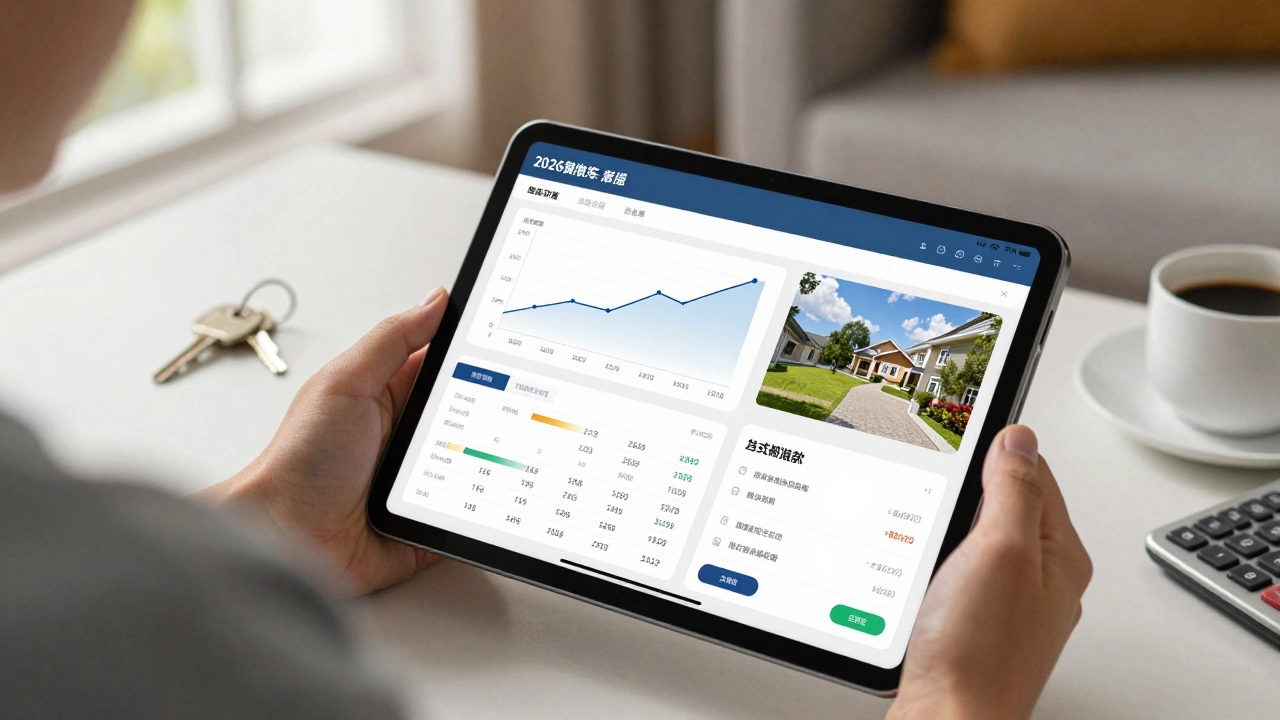
Use this tool to compare the true monthly costs of renting versus buying a home in your current market conditions.
*This calculator provides an estimate based on standard financial rules of thumb. It does not account for tax deductions, investment returns on rental savings, or specific local HOA fees. Consult a financial advisor for personalized advice.
You’ve seen the headlines. You’ve heard your friends talk about equity. You’ve probably scrolled through listings late at night, wondering if now is finally the right time to stop renting and start owning. But here’s the uncomfortable truth: buying a house isn’t automatically smart just because society tells you it is. In fact, for many people in 2026, staying in a rental might be the financially superior move.
The decision to buy a house is no longer a simple path to wealth. With shifting interest rates, changing urban dynamics, and new digital tools allowing you to buy property online with a few clicks, the landscape has changed dramatically. Before you sign on the dotted line, you need to look past the emotional appeal of having your own front door and look at the cold, hard numbers.
The Hidden Costs of Ownership Nobody Talks About
We often compare the monthly mortgage payment to the monthly rent. If the mortgage is $100 cheaper than the rent, we assume we’re saving money. That’s a dangerous trap. When you rent, your landlord pays for the roof leaking, the heater breaking, and the lawn dying. When you own, those costs come out of your pocket, immediately.
To get a true picture, you need to calculate the total cost of ownership. This includes:
- Property taxes: These can rise independently of your income or home value.
- Home insurance: Premiums have been rising globally due to climate-related risks.
- Maintenance and repairs: A good rule of thumb is to set aside 1% of your home’s value every year for maintenance. On a $500,000 home, that’s $5,000 a year, or roughly $415 a month.
- Closing costs: Buying involves fees for inspections, appraisals, and legal work that can amount to 2-5% of the purchase price.
If you add these hidden costs to your mortgage principal and interest, your actual monthly outflow might be significantly higher than your current rent. For example, in cities like Sydney or Melbourne, where property prices are high relative to incomes, the "break-even" point-the time it takes for ownership to become cheaper than renting-can stretch out to seven or eight years. If you plan to move sooner than that, you’ll likely lose money on the transaction costs alone.
The Rent vs. Buy Math: A Practical Example
Let’s look at a realistic scenario. Imagine you find a condo for $600,000. The monthly mortgage (principal and interest) at current rates might be around $3,200. Your comparable rental unit costs $2,800. On the surface, buying looks expensive by $400 a month.
However, when you buy, part of that $3,200 goes toward building equity. When you rent, none of that $2,800 builds equity. So, is the extra $400 worth it? Not necessarily. You also have to consider what happens to that rental money if you invest it instead. If you take the $400 difference plus the tax benefits of homeownership (where applicable) and invest them in a diversified portfolio averaging a 7% return, you might end up with more net worth after five years than the homeowner who tied up their capital in illiquid real estate.
This calculation changes based on your location. In areas with rapid appreciation, buying wins. In stagnant markets, renting and investing often wins. The key is not to guess; it’s to run the numbers for your specific city and zip code.
| Expense Category | Renter ($2,800/mo) | Buyer ($600k Home) |
|---|---|---|
| Housing Payment | $33,600 | $38,400 |
| Maintenance & Repairs | $0 | $6,000 |
| Insurance & Taxes | $0 | $4,500 |
| Total Annual Outflow | $33,600 | $48,900 |
As the table shows, the cash flow requirement for buying is significantly higher. The benefit comes from asset appreciation and forced savings, not immediate monthly savings.
Why Buying Property Online Changes the Game
In the past, buying a house was a slow, opaque process dominated by local agents who controlled information. Today, technology has democratized access. Platforms that allow you to buy property online provide transparency that was previously impossible. You can view historical price data, neighborhood crime stats, school ratings, and even flood zone maps before you ever step foot on the property.
This shift reduces the risk of overpaying. In traditional models, sellers often priced homes based on emotion or recent comps that might not reflect true market value. Online platforms use algorithms to suggest fair market values, giving buyers leverage. Furthermore, virtual tours and digital documentation mean you can evaluate properties across different cities without taking time off work. This flexibility is crucial for remote workers who are no longer tied to a specific commute radius.
However, convenience brings its own risks. Relying solely on photos can hide structural issues. Always insist on a professional inspection, even if you’re buying sight-unseen through an online platform. The digital layer should enhance your due diligence, not replace it.
The Flexibility Factor: Why Staying Put Might Be Costly
One of the biggest non-financial costs of buying a house is lost flexibility. Life is unpredictable. You might get a job offer in another city, decide to start a family, or simply want to downsize. When you own a home, moving becomes a logistical nightmare that can take months. Selling a home involves staging, showing, negotiating, and waiting for closing. During this time, you’re stuck.
Renters, on the other hand, can pivot quickly. In a volatile job market, the ability to relocate for better opportunities is a significant economic advantage. If you buy a house and then need to sell in a downturn, you might be forced to sell at a loss. Renters don’t face this capital risk. They can walk away from a bad lease (with notice) without losing their life savings.
Consider your timeline. If you plan to stay in the same area for less than five years, the transaction costs of buying and selling will likely eat up any potential gains from appreciation. Five years is generally considered the minimum break-even period for most markets.
When Buying Actually Makes Sense
Despite the caveats, buying a house remains one of the most effective ways to build long-term wealth for the right person. It makes sense if:
- You have stability: You have a steady income, an emergency fund covering six months of expenses, and low debt-to-income ratio.
- You plan to stay put: You intend to live in the home for at least 7-10 years, allowing time to absorb market fluctuations and recoup transaction costs.
- You value control: You want the freedom to renovate, paint, and customize your space without asking permission.
- Interest rates are favorable: Locking in a fixed rate when they are relatively low can protect you against future inflation and rate hikes.
In these scenarios, the house acts as a hedge against inflation. As the cost of living rises, your fixed mortgage payment stays the same (if you have a fixed-rate loan), while the value of your asset potentially increases. This creates positive leverage, where your wealth grows faster than your debt.

Red Flags: Signs You Should Wait
Before you commit, ask yourself these hard questions. If the answer is yes to any of these, you should probably wait:
- Do you have less than 20% down? While low-down-payment loans exist, they often require private mortgage insurance (PMI), which adds thousands to your annual cost.
- Is your job insecure? Layoffs happen. Can you afford two mortgages if you lose your income and can’t sell quickly?
- Are you buying purely for speculation? Betting on short-term price spikes is gambling, not investing. Real estate is a long-game asset class.
- Does the monthly payment exceed 28% of your gross income? This is the standard affordability threshold. Exceeding it strains your budget and limits your ability to save for retirement or other goals.
Buying a house is a massive financial commitment. It shouldn’t be driven by FOMO (Fear Of Missing Out) or social pressure. It should be a calculated decision based on your personal financial health and life goals.
Navigating the Market in 2026
The market in 2026 is characterized by a correction from the pandemic-era boom. Prices in many major metros have stabilized or slightly declined, offering buyers more choice and less competition. However, inventory remains tight in desirable neighborhoods. This means that while you may not need to enter bidding wars as often, finding the *right* home still requires patience and precision.
Leverage technology to your advantage. Use online tools to track price history. Look for homes that have been on the market for more than 30 days; these sellers may be more motivated to negotiate. Also, consider emerging neighborhoods rather than established hotspots. Areas undergoing gentrification or infrastructure development often offer better entry points and higher growth potential.
Finally, consult with a fee-only financial advisor, not just a real estate agent. Agents are paid to close deals; advisors are paid to protect your wealth. Get an unbiased opinion on whether buying aligns with your broader financial strategy.
Is it better to rent or buy in 2026?
It depends on your timeline and financial situation. If you plan to stay in one place for 7+ years and have stable income, buying is usually better for long-term wealth building. If you value flexibility, have less than 20% down, or plan to move within 5 years, renting is often the smarter financial choice.
What are the hidden costs of buying a house?
Beyond the mortgage, you must account for property taxes, home insurance, maintenance (roughly 1% of home value annually), closing costs (2-5% of purchase price), and potential HOA fees. These can add hundreds to your monthly bill.
Can I really buy property online safely?
Yes, but with caution. Online platforms provide great data and transparency. However, always hire a local inspector and attorney. Never skip the physical inspection, even if you’re buying remotely. Use online tools for research, not for final verification.
How much house can I afford?
A common rule is that your total housing costs should not exceed 28% of your gross monthly income. Additionally, ensure you have a 20% down payment to avoid private mortgage insurance (PMI) and maintain a healthy emergency fund.
What is the break-even point for buying vs renting?
The break-even point is typically 5 to 7 years. This is the time it takes for the equity built and appreciation to offset the higher transaction costs of buying (closing costs, agent fees) compared to renting.