CPM Calculator for Commercial Real Estate Advertising
Calculate the Cost Per Thousand (CPM) for your commercial real estate advertising campaigns. CPM measures the cost to reach 1,000 people with your ad.
Your CPM
Example: $3,200 ÷ 480,000 impressions × 1,000 = $6.67
When you hear "CPM" in real estate, you might think it’s about rent or sale prices. But in commercial property, CPM means something very specific: Cost Per Thousand. It’s not about how much a building costs - it’s about how much you pay to reach 1,000 people with your ad near that property.
What Exactly Is CPM in Commercial Real Estate?
CPM stands for Cost Per Mille, where "mille" is Latin for thousand. In real estate, it’s used almost exclusively in advertising and marketing - not in pricing leases or sales. If you’re promoting a retail space, office building, or industrial park, CPM tells you how much it costs to show your ad to 1,000 people who pass by or interact with it.
For example, if you spend $5,000 on a billboard next to a busy highway near a shopping center, and that billboard is seen by 500,000 people in a month, your CPM is $10. That’s because $5,000 divided by 500 (since 500,000 ÷ 1,000 = 500) equals $10.
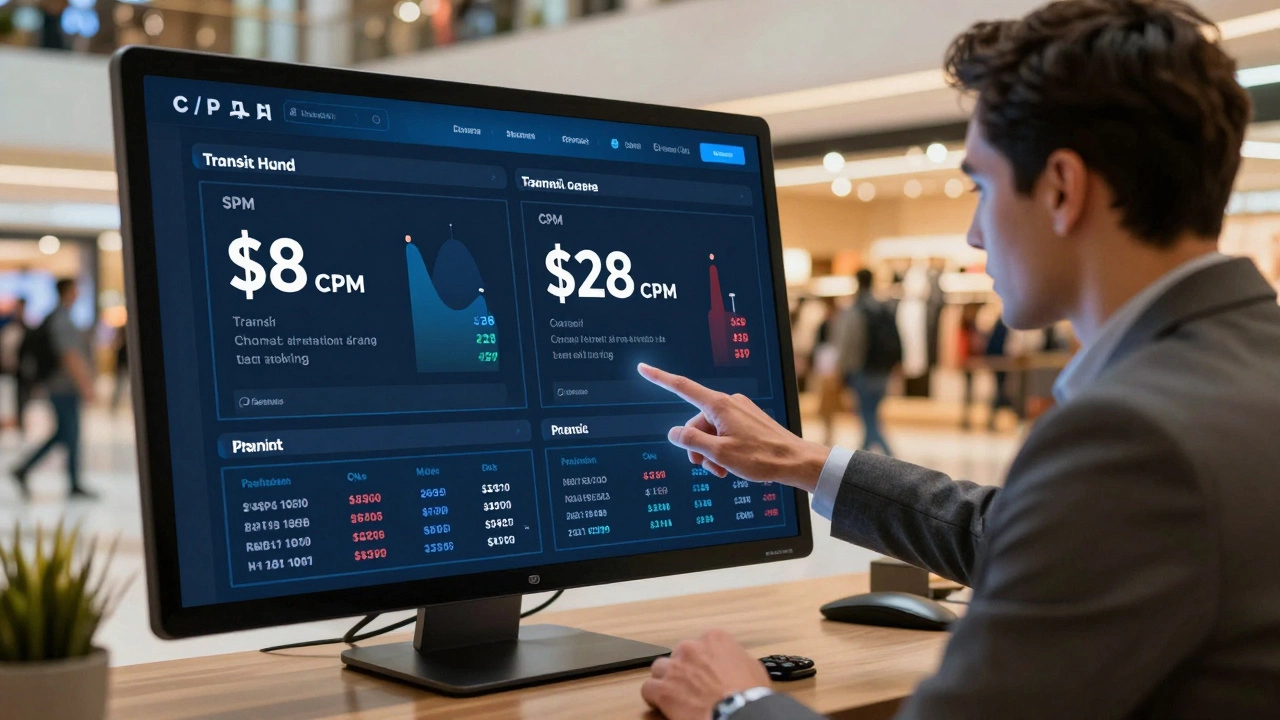
This metric helps landlords, brokers, and developers compare the value of different advertising spots. A $2,000 digital ad on a local app might have a CPM of $25, while a $15,000 outdoor sign might have a CPM of $8. The lower the CPM, the more efficient the ad - assuming the audience matches your target.
Why CPM Matters More in Commercial Real Estate Than Residential
In residential real estate, ads target individual buyers or renters. You’re looking at Facebook ads, MLS listings, or open house flyers. Those use cost per click (CPC) or cost per lead (CPL).
But commercial real estate is different. You’re not selling to one family. You’re selling space to businesses - a coffee shop, a logistics firm, a law office. These tenants care about foot traffic, visibility, and exposure. That’s why advertising around the property matters so much.
Think of it this way: if you’re leasing out a retail unit in a shopping plaza, you need to prove to potential tenants that people will actually see their brand. A high CPM (expensive reach) might scare off small businesses. A low CPM (cheap reach) makes your property look like a smart investment.
How CPM Is Calculated in Real Estate Advertising
The formula is simple:
- Take your total advertising cost
- Divide it by the total number of impressions (views)
- Multiply by 1,000
Formula: CPM = (Total Cost ÷ Total Impressions) × 1,000
Let’s say you run a 30-day digital ad campaign targeting people within 5 kilometers of a warehouse for lease. You spend $3,200, and the platform reports 480,000 impressions.
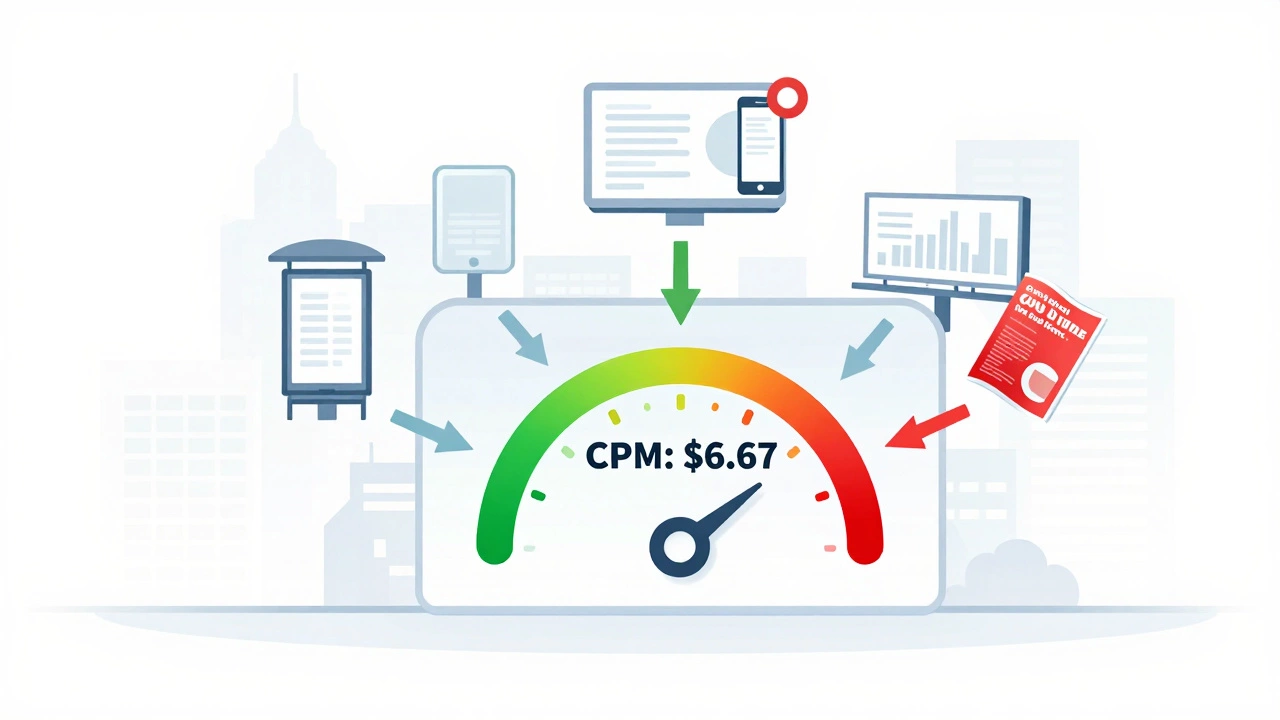
CPM = ($3,200 ÷ 480,000) × 1,000 = $6.67
That means every 1,000 people saw your ad for about $6.67. If another campaign on a different platform costs $4,000 for 300,000 impressions, its CPM is $13.33. The first one is more cost-effective.
Where You’ll See CPM Used in Commercial Real Estate
CPM isn’t used in lease agreements or sale contracts. It’s used in marketing materials, brochures, and pitch decks to show potential tenants the value of location.
Here are common examples:
- Outdoor advertising: Billboards, bus shelters, or transit ads near a property.
- Digital targeting: Geo-fenced ads on apps like Google Maps or Waze showing people who drive past your building.
- Print media: Ads in local business magazines or trade journals that reach commercial decision-makers.
- Event sponsorships: Sponsoring a local business expo where your property is promoted to 10,000 attendees.
Property managers in Sydney’s CBD often include CPM data in tenant prospectus packets. If a retail space is near a train station with 120,000 daily commuters, and the landlord spends $1,800 on station posters, the CPM is just $15. That’s a strong selling point for a boutique fitness studio looking for visibility.
CPM vs. Other Metrics: What’s the Difference?
It’s easy to mix up CPM with other real estate terms. Here’s how it stacks up:
| Metric | What It Measures | Used For | Typical Range in Commercial Real Estate |
|---|---|---|---|
| CPM | Cost to reach 1,000 people | Ad efficiency and visibility | $5-$30 |
| CPC | Cost per click on a digital ad | Website traffic to listing pages | $0.80-$2.50 |
| CPL | Cost per qualified lead | Generating tenant inquiries | $50-$200 |
| ROI | Return on advertising spend | Overall campaign success | Varies widely |
CPM tells you how cheaply you’re getting eyeballs. CPC tells you how many people clicked. CPL tells you how many became serious leads. ROI tells you if you made money. All four matter - but CPM is the first step.
What’s a Good CPM for Commercial Real Estate?
There’s no universal "good" number. It depends on location, audience quality, and medium.
In Sydney’s inner-city suburbs, a well-placed digital ad targeting business owners might hit a CPM of $8-$12. A billboard in a low-traffic industrial area could be $25-$40 - and that’s a bad deal.
Here’s a rough benchmark:
- $5-$10: Excellent. Usually digital or high-density urban areas.
- $11-$18: Average. Common for transit ads or local print.
- $19-$30: High. Might be acceptable for premium locations like airport terminals or major intersections.
- Over $30: Red flag. Ask why. Is the audience real? Is the data accurate?
Always check the source of the impression numbers. Some vendors inflate numbers by counting every reload, bot traffic, or duplicate views. Ask for third-party verification - like Google Analytics, Nielsen, or local traffic counters.
How to Use CPM to Sell or Lease Commercial Space
If you’re a landlord or agent, use CPM to make your property stand out.
Don’t just say: "This location has great visibility."
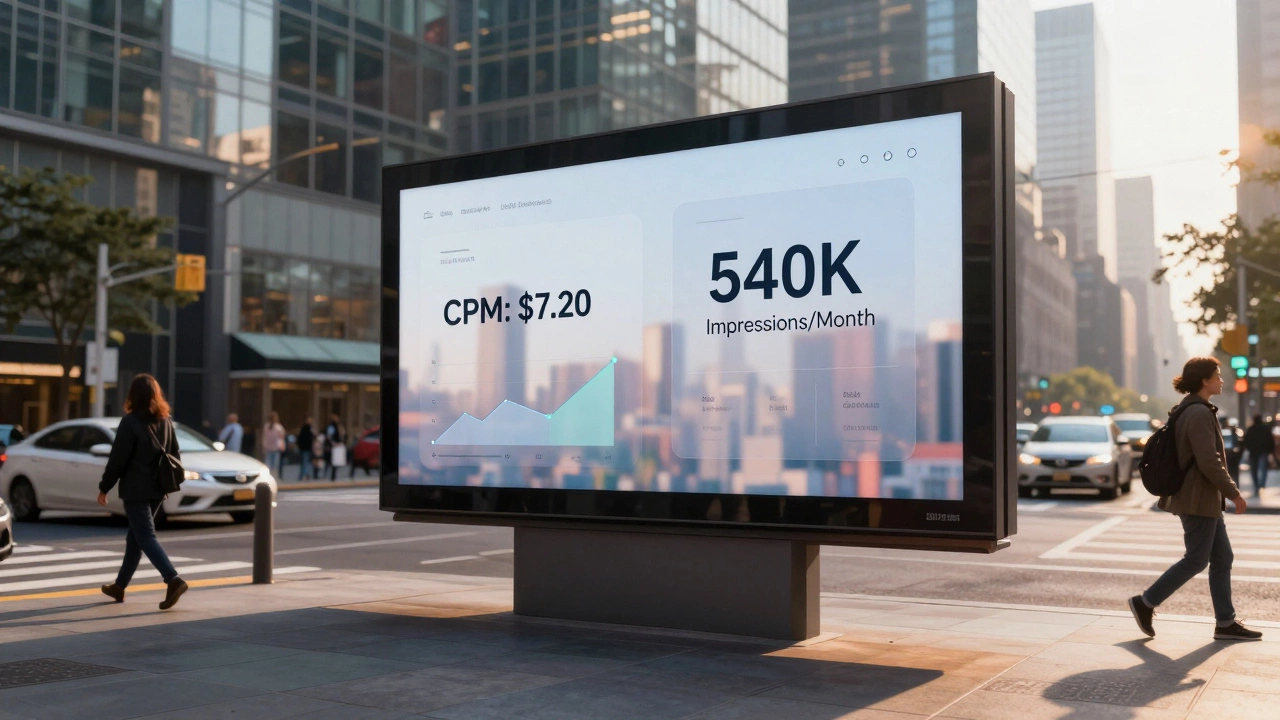
Say: "This retail unit is adjacent to a bus stop with 18,000 daily riders. Our targeted ad campaign reached 90% of them over 30 days at a CPM of $7.20. That’s over 540,000 impressions for under $4,000 - making your brand visible to thousands before they even walk in the door."
That kind of detail builds trust. It turns a vague claim into a measurable advantage.
For tenants, ask for the CPM data before signing a lease. If the landlord can’t provide it, dig deeper. Are they hiding low foot traffic? Or just not measuring anything? Either way, it’s a risk.
Common Mistakes When Using CPM in Real Estate
Even experienced agents mess this up. Here are the top three errors:
- Confusing CPM with rent per square foot. They’re not the same. One is advertising cost. The other is occupancy cost.
- Using vague "exposure" claims. Saying "thousands pass by" without numbers is meaningless. Always demand data.
- Ignoring audience quality. A CPM of $5 sounds great - unless the 1,000 people are teenagers on their way to a skate park, and you’re trying to lease office space to a law firm.
CPM only works if the people seeing your ad are the people you want to attract.
CPM Trends in 2025
As of 2025, digital targeting in commercial real estate has gotten smarter. Geo-fencing now tracks people who linger near properties for more than 5 minutes - not just those who drive by. This means CPM numbers are becoming more accurate.
AI tools can now predict which types of businesses are most likely to respond to ads near specific property types. A warehouse near a highway? Ads targeting logistics companies get 3x higher conversion than generic ones - even if the CPM is the same.
Also, outdoor advertising is coming back. After years of digital-only focus, brands are rediscovering the power of large-format billboards. In Sydney, CPMs for highway billboards near major freight routes have dropped 15% since 2023 due to increased supply and better measurement tools.
Is CPM the same as rent per square meter in commercial real estate?
No. CPM stands for Cost Per Thousand and refers to advertising cost to reach 1,000 people. Rent per square meter is the price you pay to occupy physical space. They’re completely different metrics - one is marketing, the other is occupancy.
Can CPM help me decide which property to lease?
Yes - if the landlord provides verified data. A lower CPM near your target customers means more exposure for less money. If two properties have similar rent, the one with a lower CPM gives you better marketing value. Always ask for the CPM calculation and data source.
Do I need to pay for CPM advertising if I’m leasing a commercial space?
Not necessarily. CPM is what the landlord or agent spends to promote the property. As a tenant, you don’t pay for it directly. But if the landlord uses CPM data to sell the space, it’s a sign they’re serious about marketing. That’s good for you - it means more foot traffic and visibility.
How do I verify CPM numbers from a real estate agent?
Ask for the source: Was it measured by Google Ads, Nielsen, or a third-party traffic counter? Avoid agents who just say "we estimate" or "thousands pass by." Request screenshots of ad platform reports with date ranges and impression counts. If they refuse, walk away.
Is CPM used in residential real estate?
Rarely. Residential sales focus on cost per lead (CPL) or cost per click (CPC) because you’re targeting individual buyers. CPM is for commercial properties where visibility to large groups of potential customers matters - like retail, restaurants, or offices.
Next Steps: What to Do With CPM Data
If you’re a landlord: Start tracking CPM for every ad campaign you run. Use free tools like Google Ads or Facebook Insights to get impression data. Add CPM to your property listings. It turns vague claims into hard numbers.
If you’re a tenant: Ask for CPM data before signing a lease. Compare it across locations. A slightly higher rent might be worth it if the CPM is half as much.
If you’re a broker: Use CPM as a selling tool. It’s not just about the building - it’s about the audience it reaches. That’s what makes your listings stand out in a crowded market.