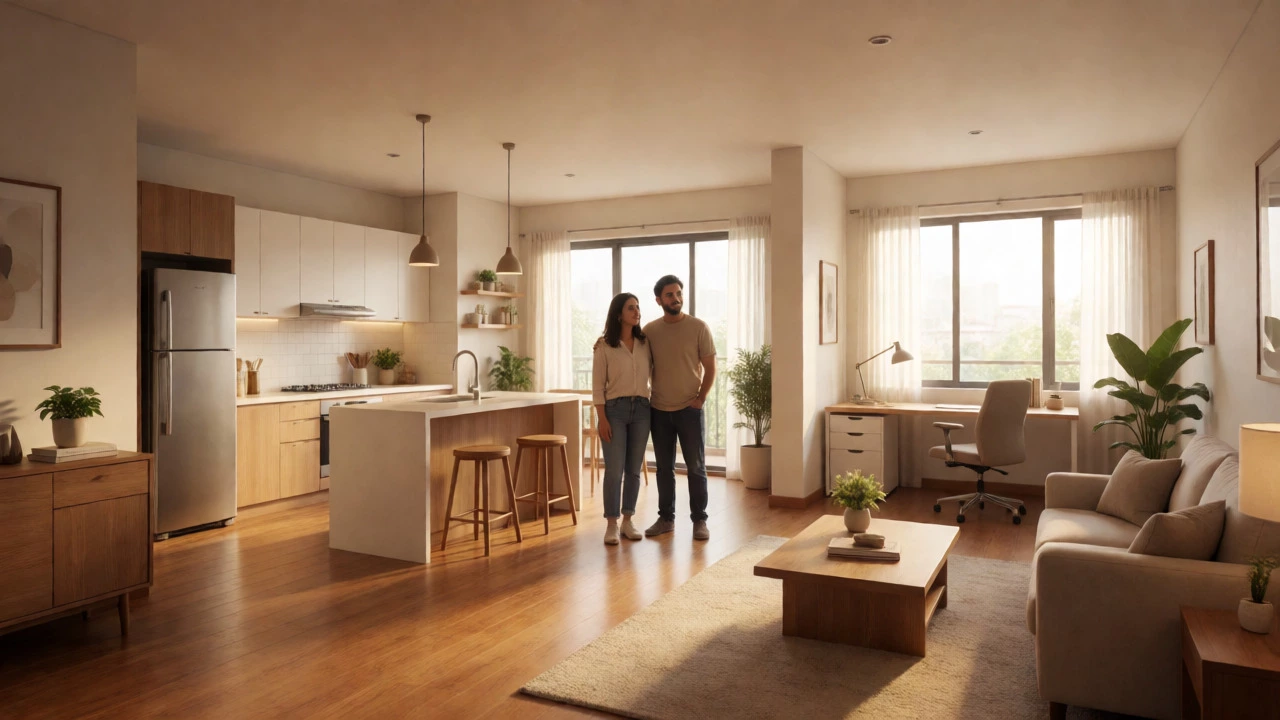
Real Estate Layout Decoder
Confused by terms like "3i Flat" vs "2BHK"? Use this calculator to input the actual dimensions and price to see if the label matches the value.
Property Details
Quick Reference Guide
- 2BHK: Typically 60–85 sqm (650–900 sqft). Best for couples/small families.
- 3i/Premium: Often implies extra space/study. Verify if it's truly 3 bedrooms or just marketing.
- Carpet Area: The only area you live in. Always prioritize this over "Built-up".
- Verification: Check floor plans for distinct doors/windows in all claimed rooms.
You’re scrolling through property listings, looking for your first home or an investment unit. You see a listing that says "3i Flat." You know what a 1BHK or 2BHK is, but this "3i" label throws you off. Is it three rooms? Is it a specific brand of building? Does it mean something different in Sydney than it does in Mumbai?
Here is the straight answer: 3i flat is a colloquial term used primarily in South Asian real estate markets (particularly India) to describe a 3-bedroom apartment with integrated utility spaces and modern amenities. However, when you cross-reference this with "2BHK apartments," confusion often arises because terminology varies wildly by region. In many contexts, especially in Australia and Western markets, we don't use the "i" suffix at all. Instead, we stick to standard metrics like bedrooms, bathrooms, and living areas.
If you are a buyer or renter confused by international listings, or if you are an investor looking at cross-border opportunities, understanding these layout codes is crucial. It saves you from booking a viewing for a property that doesn’t match your lifestyle needs. Let’s break down exactly what these terms mean, how they differ, and why the distinction matters for your wallet.
Decoding the Real Estate Alphabet Soup
Real estate jargon is notorious for being inconsistent. In Australia, we use clear descriptors: a "2-bedroom apartment" has two private sleeping quarters. In India, the code is BHK, which stands for Bedroom, Hall, and Kitchen. This system is deeply embedded in the market there. So, a 2BHK is a standard two-bedroom unit.
The term "3i" usually appears in premium developments where developers want to signal that the third space isn't just a cramped bedroom. The "i" often implies integrated or improved layouts. It might refer to a 3-bedroom unit that includes a dedicated study, a servant quarter, or a larger balcony area counted as part of the living experience. But here is the catch: if you are looking at a "2BHK" and someone calls it a "3i," they might be stretching the truth. Or, they might be referring to a specific project name or a tiered amenity package rather than the physical room count.
In the context of your query about 2BHK apartments, it is vital to distinguish between the legal definition of the space and the marketing fluff. A true 2BHK has two distinct rooms suitable for beds. A "3i" variant in some Indian markets might offer a 2BHK layout but with a converted lobby or a large hall that can technically fit a bed, hence the "3" implication. Always check the carpet area versus the built-up area.
Why Terminology Matters for Your Budget
Why should you care if it's called 3i or 2BHK? Because price per square foot changes based on these labels. In many emerging markets, "premium" layouts command a higher price. If a developer labels a unit as "3i," they are positioning it above a standard 2BHK. They are selling you the idea of extra space or better flow.
Consider the financial implications. If you are buying in a market where "3i" denotes a larger carpet area, you are paying for more concrete. But if "3i" is just marketing speak for a standard 2BHK with a fancy brochure, you are overpaying for aesthetics. In Sydney, we avoid this ambiguity. We look at the floor plan. We measure the rooms. We don't guess.
When comparing properties, always ask for the Carpet Area measurement. This is the net usable floor area. Do not rely on the title alone. A "3i" flat might have a smaller actual bedroom size than a well-designed "2BHK" if the builder prioritized wide corridors over private space.
Structural Differences: 2BHK vs. 3-Bedroom Configurations
To make sense of this, let’s look at the structural realities. A standard 2BHK is designed for small families, couples, or single professionals who need a guest room. A 3-bedroom configuration (often mislabeled or marketed as 3i in certain regions) caters to larger families or those needing a home office.
| Feature | Standard 2BHK | "3i" / Premium 3-Bed Layout | Australian Equivalent |
|---|---|---|---|
| Primary Use | Couples, small families | Larger families, multi-generational | 2-Bedroom Apartment |
| Room Count | 2 Bedrooms + Hall + Kitchen | 3 Sleeping Spaces (incl. Study/Servant) | 2 Private Rooms |
| Average Size | 60-85 sqm | 90-120 sqm | Varies by city |
| Price Index | Moderate | Premium | Market Dependent |
Notice the gap in average size. If you are comparing a 2BHK to a "3i," you are likely comparing apples to oranges unless the "3i" is actually a compact 2-bed with a very efficient layout. In Sydney, a 2-bedroom apartment typically ranges from 50 to 70 square meters in inner-city suburbs like Surry Hills or Parramatta. Anything larger is usually classified as a 3-bedroom or a dual-key unit.
Regional Nuances: Where "3i" Comes From
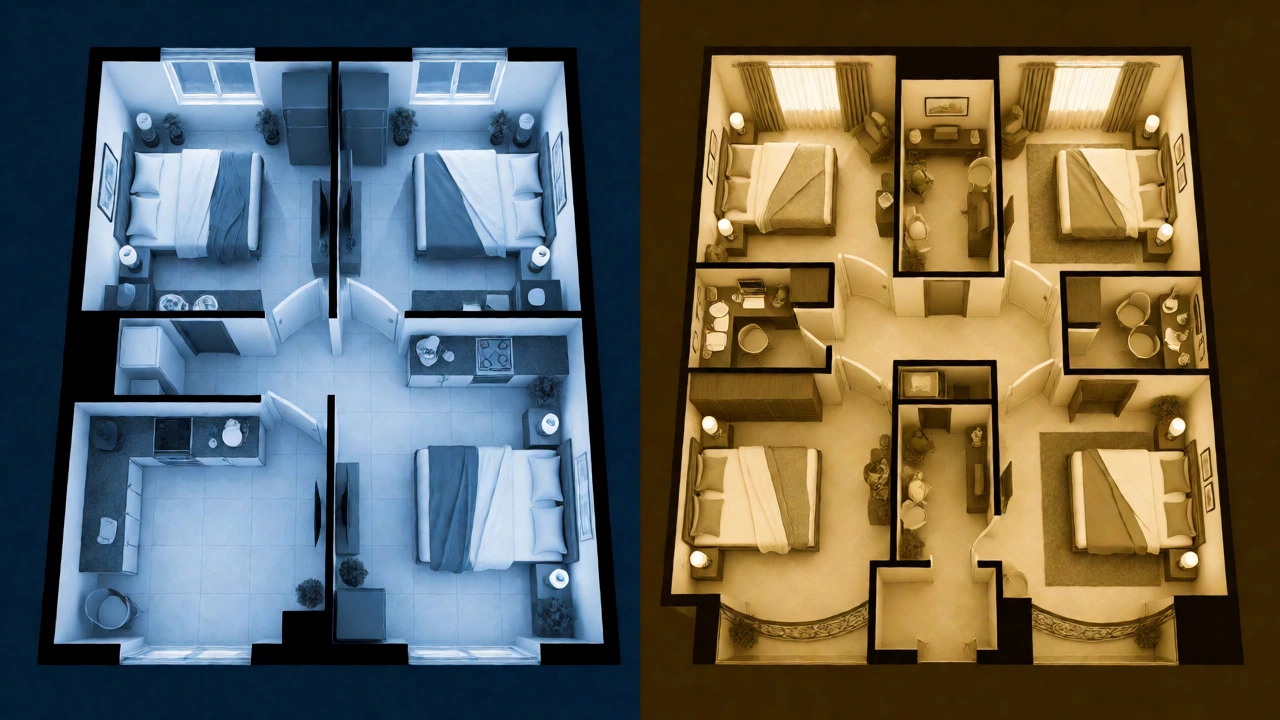
The term "3i" is not universal. You will rarely hear a Sydney agent say, "Check out this 3i flat." They will say, "This is a three-bedroom apartment with a study." The usage of "3i" is heavily skewed towards Indian real estate portals like MagicBricks or Housing.com. In these markets, developers compete fiercely on features. Adding an "i" suggests innovation-smart home integration, modular kitchens, or vaastu-compliant layouts.
If you are an expat or an investor looking at overseas assets, be wary of these localized terms. A "3i" in Bangalore might have a completely different meaning than a "3i" in Dubai. Always verify the floor plan images. Look for:
- Doorways: Are there three distinct doors leading to sleeping areas?
- Windows: Does each "bedroom" have natural light? Some "3rd rooms" are windowless studies.
- Bathrooms: How many attached baths? A true 3-bedroom usually requires at least two bathrooms for functionality.
How to Verify a Property Listing
Don’t let the title fool you. When you find a listing that piques your interest, follow this checklist to ensure the "3i" or "2BHK" label matches reality.
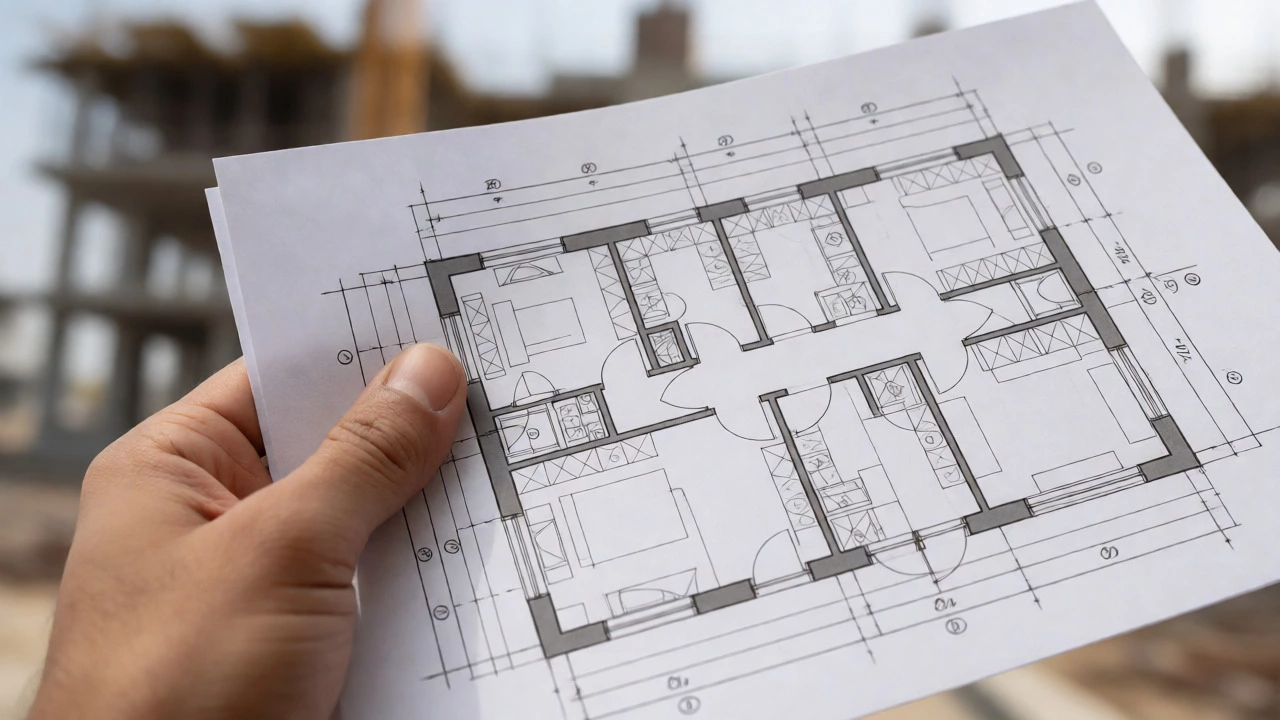
- Request the Floor Plan: Never buy or rent based on photos alone. Photos can use wide-angle lenses to make tiny rooms look spacious. The floor plan shows exact dimensions.
- Check the RERA Registration (if applicable): In regulated markets, the registered document will state the exact number of bedrooms. This is legally binding.
- Visit Physically: Walk through the space. Can you actually fit a queen-size bed and a wardrobe in the third room? If not, it’s not a bedroom; it’s a storage closet.
- Ask About Common Areas: Sometimes, "3i" refers to access to exclusive common areas like a private lounge or gym, not the unit itself. Clarify if the premium is for the unit or the amenities.
This due diligence protects you from the "space illusion." Developers often count balconies, lobbies, and even wall thicknesses into the "built-up area." The carpet area is what you live in. Focus on that.
Investment Potential: Which Layout Wins?
From an investment standpoint, liquidity matters. In most major cities, 2BHK units are the most liquid. They appeal to the widest demographic: young professionals, downsizing retirees, and small families. There is always demand for them.
Three-bedroom units (or "3i") target a narrower audience. Families with children need the space, but they also need schools nearby and parking. This makes them harder to sell quickly compared to a 2BHK. However, the rental yield can be higher per tenant group. A family renting a 3-bedroom unit often pays a premium and stays longer, reducing turnover costs.
If you are in Sydney, the trend is shifting. With high interest rates and affordability crises, smaller 2-bedroom units are seeing robust rental demand. Investors prefer the lower entry price and easier exit strategy. Large 3-bedroom apartments are becoming niche products, often held by owner-occupiers rather than pure investors.
Common Pitfalls to Avoid
Even experienced buyers get tripped up. Here are the most common mistakes regarding layout terminology:
- Assuming "Hall" means Living Room: In BHK terminology, "Hall" is the living/dining area. Ensure it’s large enough for a sofa set and dining table.
- Ignoring Ventilation: A "3i" flat might have a dark kitchen or a bathroom without windows. Check for exhaust fans and natural airflow.
- Overlooking Parking: In dense urban areas, parking is scarce. A 3-bedroom unit often requires two cars. Does the listing include two parking spots? Many don’t.
- Confusing Leasehold with Freehold: Especially in international markets, the ownership type affects value more than the room count. Verify the tenure.
Final Thoughts on Choosing Your Space
So, what is a 3i flat? It’s mostly a marketing term designed to differentiate a product in a crowded market. For a 2BHK apartment seeker, it serves as a reminder that labels can be deceptive. Whether you are in Sydney, London, or Delhi, ignore the acronym. Focus on the dimensions, the flow, and the legal description.
Your home should serve your life, not confuse you with its name. If a "3i" offers the space you need, buy it. If it’s just a rebranded 2BHK with a higher price tag, walk away. Knowledge is your best asset in real estate. Use it to negotiate better, buy smarter, and live comfortably.
Is a 3i flat bigger than a 2BHK?
Generally, yes. A "3i" designation usually implies a layout with three sleeping spaces or significantly more usable area than a standard 2BHK. However, always compare the carpet area in square meters or feet, as definitions vary by developer and region.
Can I convert a 2BHK into a 3-bedroom unit?
Sometimes. If the living room (hall) is large enough, you might partition it to create a third room. However, this reduces living space and may violate strata rules or local building codes regarding ventilation and egress. Always consult a professional before renovating.
Why do Indian listings use "BHK" while others don't?
BHK (Bedroom, Hall, Kitchen) is a standardized shorthand in the Indian real estate industry for quick classification. Western markets typically list "Number of Bedrooms" separately from total area, avoiding the combined acronym.
Does a 3i flat come with smart home features?
Not necessarily. While the "i" sometimes hints at "intelligent" or "innovative" features, it is primarily a layout descriptor. Smart home tech depends on the specific developer and project tier, not the room count.
Which is better for rental income: 2BHK or 3i?
2BHK units generally offer higher occupancy rates and faster tenant turnover, making them safer bets for consistent cash flow. 3-bedroom units may offer higher monthly rent but sit vacant longer due to a smaller pool of potential tenants.