Virginia Property Tax Savings Calculator
Enter Your Property Details
Your Estimated Savings Breakdown
Enter your details to see how much you could save by claiming exemptions and appealing your assessment.
You bought a home in Virginia, maybe in Richmond, Alexandria, or out in the countryside. You love it. But then comes the annual notice from your local county or city assessor’s office, and the number on that bill feels a little higher than you expected. It’s frustrating. You work hard for your money, and seeing a chunk of it go toward property tax every year can sting.
Here is the hard truth right off the bat: you cannot simply "avoid" paying property tax in Virginia if you own real estate. It is a mandatory fee for owning land and buildings within a specific jurisdiction. Trying to evade it through illegal means will lead to liens, penalties, and potentially losing your home.
However, there is a massive difference between "evading" tax and "reducing" it. The system is designed with several legal loopholes, exemptions, and appeal processes that allow homeowners to significantly lower their bill. If you are not using these tools, you are likely overpaying. Let’s look at how you can legally keep more money in your pocket.
Understanding How Virginia Calculates Your Bill
To fight the bill, you first need to understand how it’s built. Unlike some states that have state-level property taxes, Virginia leaves this entirely up to local governments-counties and independent cities. This means the rules in Fairfax County might differ slightly from those in Arlington or Henrico.
Your total tax bill is calculated using a simple formula:
- Fair Market Value (FMV): What your home would sell for on the open market today.
- Assessed Value: The value assigned by your local assessor. In many jurisdictions, this is a percentage of the FMV (often 100%, but sometimes less).
- Tax Rate: The amount charged per $100 of assessed value. This is set by your local Board of Supervisors or City Council.
The Assessor's Office is the local government body responsible for determining the fair market value of all real estate properties within its jurisdiction. They visit properties periodically, often just looking from the street, and update values based on recent sales of comparable homes nearby.
If the assessor says your house is worth $400,000, but you believe it’s only worth $350,000 because of a noisy highway or a cracked foundation, that gap is where your savings live. The goal isn’t to stop paying; it’s to ensure the value they use is accurate.
The Power of the Homestead Exemption
The most common way people accidentally overpay is by forgetting to apply for exemptions. The big one is the Homestead Exemption is a tax benefit that reduces the taxable value of a primary residence for eligible homeowners in Virginia.
In most Virginia counties and cities, you can exclude the first $25,000 of your home’s fair market value from taxation. Some places offer even more. For example, if your home is assessed at $300,000, the tax is only calculated on $275,000. That sounds small, but depending on your local tax rate, it can save you hundreds of dollars a year.
But wait, there’s more. If you are 65 or older, or permanently disabled, you qualify for an additional exemption. Many jurisdictions exempt another $25,000 to $100,000 of value for seniors and disabled veterans. This is free money you leave on the table if you don’t file the paperwork.
- Primary Residence Only: This applies to the house you actually live in. Your rental property or vacation cabin doesn’t count.
- Annual Filing: In some counties, you must reapply every year. In others, it’s automatic once approved. Check with your local assessor.
- Veterans Benefits: Disabled veterans can get significant reductions, sometimes up to $100,000 in excluded value, depending on the severity of the disability.
Challenging the Assessment: The Appeal Process
This is where the real savings happen. Assessors make mistakes. They miss details. They might think your finished basement adds huge value when it’s barely usable, or they might not know your roof was replaced last year. You have the right to challenge their number.
Every year, you will receive a notice of assessment. Pay close attention to the deadline for appeals. It is usually 30 days from the date of the letter. Miss this window, and you’re stuck with the high value until next year.
Property Tax Appeal is a formal process where a homeowner disputes the assessed value of their property before a local review board.
Before you spend money on a lawyer, try the informal route. Call the assessor’s office. Ask them to explain why your home is valued higher than similar homes down the street. Sometimes, a simple conversation reveals a data error-like them thinking you have two bathrooms when you only have one. If they correct it, great. Problem solved.
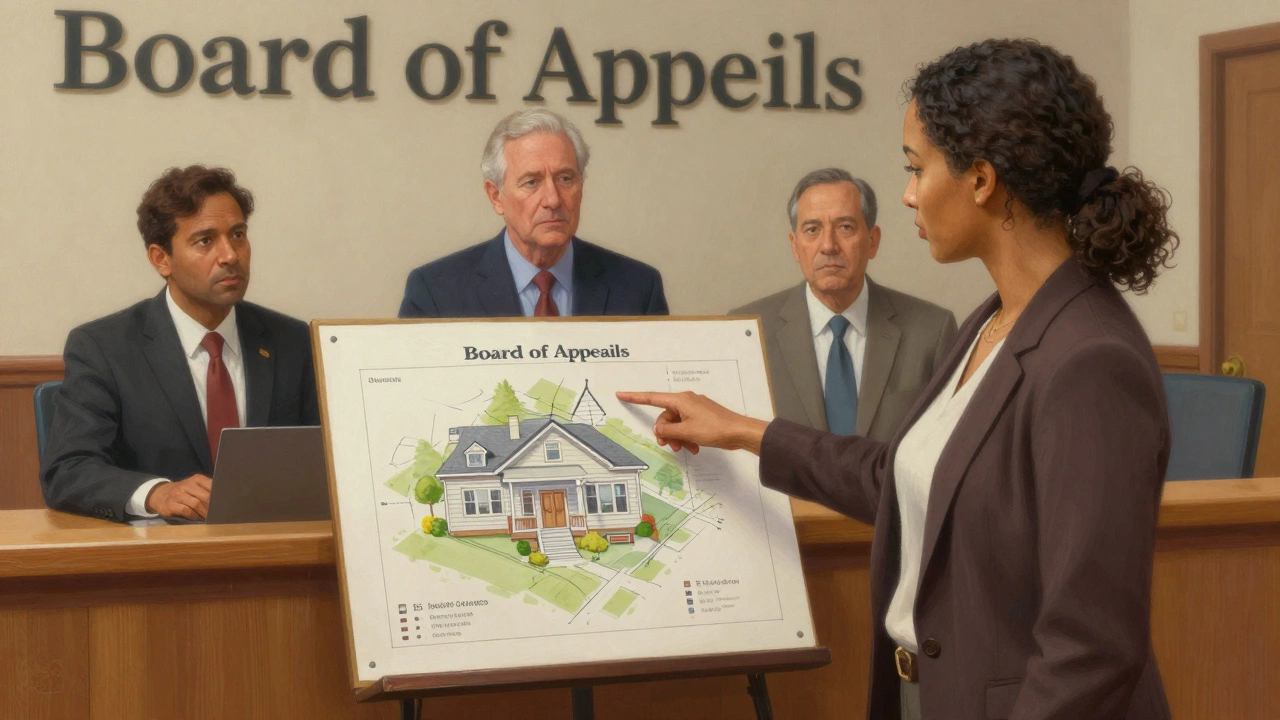
If they stand their ground, you move to the formal appeal. You present evidence to the Board of Appeals is a panel of local officials who hear disputes regarding property valuations and tax assessments. This board consists of local citizens, not necessarily tax experts, so keep your argument simple and visual.

Gathering Evidence for Your Case
You can’t just say, "I think my house is worth less." You need proof. Here is what works best:
| Evidence Type | Why It Works | How to Get It |
|---|---|---|
| Comparable Sales (Comps) | Shows what neighbors actually paid for similar homes. | Zillow, Redfin, or a local realtor’s report. |
| Photos of Defects | Proves issues that lower value (cracks, water damage, outdated systems). | Take clear, dated photos yourself. |
| Repair Estimates | Quantifies the cost to fix problems, reducing market value. | Get quotes from licensed contractors. |
| Appraisal Report | A professional opinion of value, though costly ($300-$500). | Hire a certified appraiser. |
The strongest argument is usually "comps." Find three houses in your neighborhood that sold recently. They should be similar in size, age, and condition. If your house is assessed at $400,000, but three identical houses sold for $350,000, you have a strong case. Print out the listings. Highlight the differences. Show the board that the assessor is out of touch with reality.
Don’t mention improvements you made unless they didn’t add value. Did you install a fancy pool? That might increase value. Did you just paint the walls? That maintains value but doesn’t increase it. Focus on what makes your house *less* desirable than the comps.
Tax Abatements and Special Programs
Virginia offers other ways to reduce taxes, especially if you are improving your property or fall into specific categories.
Historic Preservation Abatement: If you own a historic home listed on the National Register of Historic Places, you may qualify for a tax abatement. This freezes your assessed value for a period of time (usually 5-10 years) as long as you maintain the historic character of the building. This is huge for older homes in cities like Charlottesville or Williamsburg.
Rehabilitation Abatement: Some counties offer abatements if you substantially rehabilitate a vacant or underused property. If you buy a run-down house and spend $100,000 fixing it up, you might get a break on taxes for the added value for several years. This encourages development without punishing investors immediately.
Circuit Breaker Programs: For elderly or disabled homeowners with low income, some localities offer a "circuit breaker" refund. If your property tax bill exceeds a certain percentage of your income (e.g., 3%), you can apply for a rebate. This isn’t a reduction in the bill upfront, but it’s money back at the end of the year.
When to Hire a Professional
Should you hire a tax protestor or attorney? Maybe. If your home is worth millions, or if the assessment error is complex, yes. But for the average homeowner, hiring a pro costs $500 to $1,500. If you only save $300 a year, it takes five years to break even.
Try doing it yourself first. The Boards of Appeals are used to hearing from regular folks. They respect preparation. If you show up with printed comps, photos, and a calm demeanor, you have a good shot. Save the pro for when the stakes are high or if you’ve lost multiple appeals on your own.
Common Mistakes to Avoid
I see people mess this up all the time. Here is what not to do:
- Missing the Deadline: This is fatal. Mark your calendar the day you get the assessment notice.
- Getting Emotional: Don’t yell at the board. Don’t complain about how much you paid for the house ten years ago. They care about current market value, not your purchase price.
- Ignoring Minor Issues: Even a small reduction in assessed value matters. If you can knock $10,000 off the value, that’s still savings multiplied by your tax rate.
- Not Checking for Errors: Does the assessor say you have 2,500 square feet when you only have 2,000? Does it list a fireplace you don’t have? These clerical errors are easy wins.
Next Steps for You
Start by pulling your latest assessment notice. Look at the physical description. Is it accurate? Then, go online and find three recent sales of homes like yours. Compare the prices. If your assessed value is higher than those sales, you have a case.
Call your local assessor’s office tomorrow. Ask if you qualify for any exemptions you haven’t claimed yet. If you’re over 65, ask about the senior exemption. If you’re a veteran, ask about the disability exemption. These are quick wins.
Property tax season is not a time to be passive. It’s a time to audit your biggest annual expense. By understanding the rules, gathering evidence, and speaking up, you can ensure you’re paying what you owe-and no more.
Can I avoid paying property tax in Virginia if I don't live in the house?
No, you cannot avoid property tax on vacant land or second homes in Virginia. While you won't qualify for the homestead exemption (which is for primary residences), you are still liable for the full tax amount based on the assessed value. However, you can still appeal the assessment if you believe the value is too high.
What happens if I lose my property tax appeal?
If you lose your appeal, your assessed value remains unchanged, and you must pay the original tax bill. You generally cannot appeal the same assessment again in the same tax year. However, you can prepare a stronger case for the following year if conditions change or new comparable sales emerge.
Does selling my home affect the property tax assessment?
Yes. When you sell your home, the sale price becomes the new fair market value for tax purposes. The assessor will typically adjust the value to match the sale price. This means the new owner will start with a baseline value equal to what they paid, which may result in higher taxes if the previous owner had benefited from a lower assessed value for years.
Are there penalties for late property tax payments in Virginia?
Yes, Virginia imposes strict penalties for late payments. Typically, a penalty of 5% is added after the due date (usually October 1st or November 1st, depending on the locality). Interest accrues monthly on the unpaid balance. If taxes remain unpaid for extended periods, the local government can place a lien on the property and eventually foreclose to recover the debt.
How often does Virginia reassess property values?
Most jurisdictions in Virginia conduct a full reassessment of all properties every four years. However, interim adjustments can occur if a property is sold, renovated significantly, or if there is a mass reappraisal due to rapid market changes. You will receive a notice whenever your individual assessment changes.