Villa vs Townhouse Lifestyle Matcher
Find Your Ideal Property Type
Answer questions about your lifestyle preferences to get a personalized recommendation
ⓘWhat matters most to you?
Privacy & Space
I value having my own land, no shared walls, and total control over my property
Convenience & Community
I prefer low maintenance, shared amenities, and being part of a community
ⓘWhat's your budget range?
ⓘHow do you feel about home maintenance?
Hands-On Approach
I don't mind handling repairs, gardening, and exterior maintenance myself
Low Maintenance
I prefer paying strata fees to have someone else handle exterior upkeep
ⓘHow important is outdoor space?
Large Yard Essential
I need space for kids/pets to play, want to garden, or host outdoor gatherings
Small Patio/Courtyard
A small outdoor area for BBQs or plants is sufficient for my needs
ⓘHow important is renovation freedom?
Full Control
I want freedom to paint exteriors, add extensions, and make major changes
Limited Changes OK
I'm fine with some restrictions if it means less hassle and consistent aesthetics
Your Match Result
Villa Score
Townhouse Score
Recommendation:
Villa Benefits For You
Townhouse Benefits For You
Key Financial Considerations
Picture this: you’re scrolling through listings for a villa for sale, heart racing at the sight of a sprawling backyard. Then, just as you’re about to bookmark it, a sleek, low-maintenance townhouse pops up. Suddenly, the decision isn’t so simple. You’re torn between the dream of total privacy and the practicality of shared walls. It’s a classic dilemma in today’s housing market, especially if you’re looking at markets like Sydney where space is premium and prices are high.
The choice between a villa and a townhouse isn’t just about aesthetics; it’s about how you live, what you can afford, and what kind of responsibility you want to take on. One offers independence and land, while the other offers convenience and community. To make the right call, we need to strip away the marketing fluff and look at the structural, financial, and lifestyle realities of both property types.
Defining the Core Structures
Before we dive into costs or lifestyles, let’s get clear on what we’re actually talking about. The terms "villa" and "townhouse" often get used interchangeably in casual conversation, but they represent two distinct architectural and legal concepts.
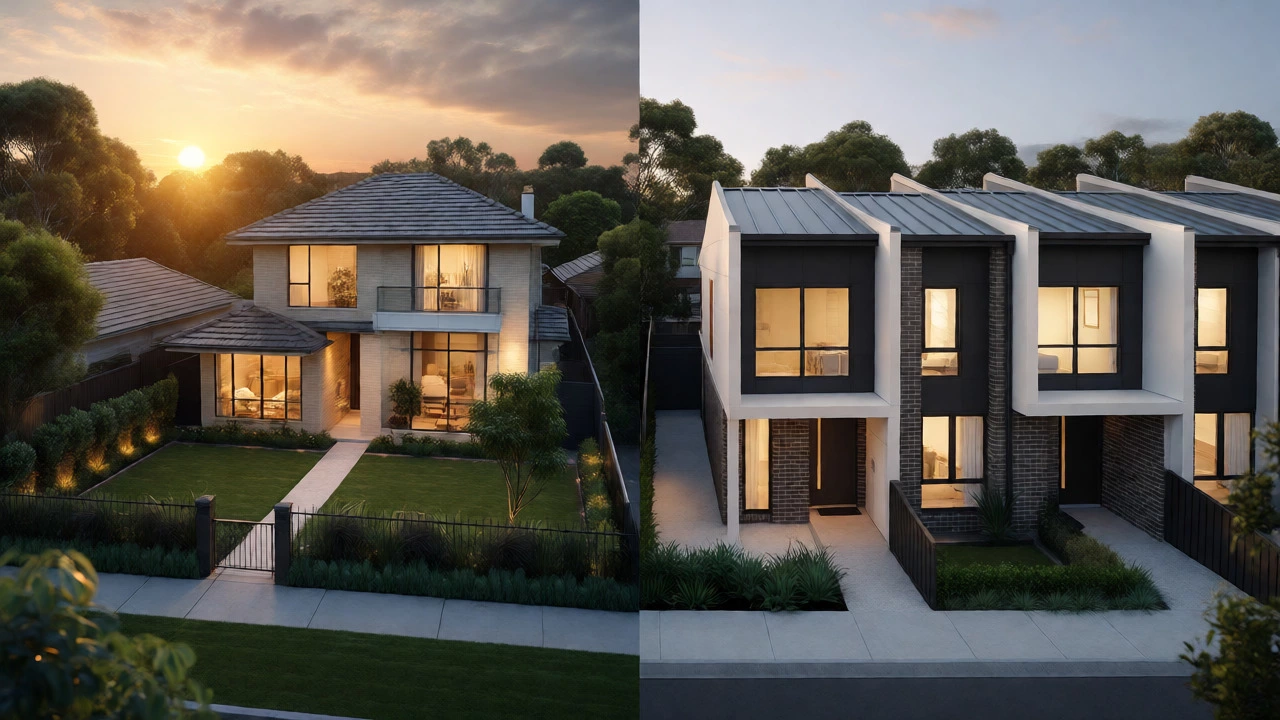
A Villa is a standalone residential building that sits on its own plot of land, completely detached from neighboring structures. Think of it as the ultimate expression of private ownership. When you buy a villa, you own the dirt beneath your feet, the air above your roof, and everything in between. There are no shared walls with neighbors, which means zero noise transfer from their side and total control over your exterior appearance.
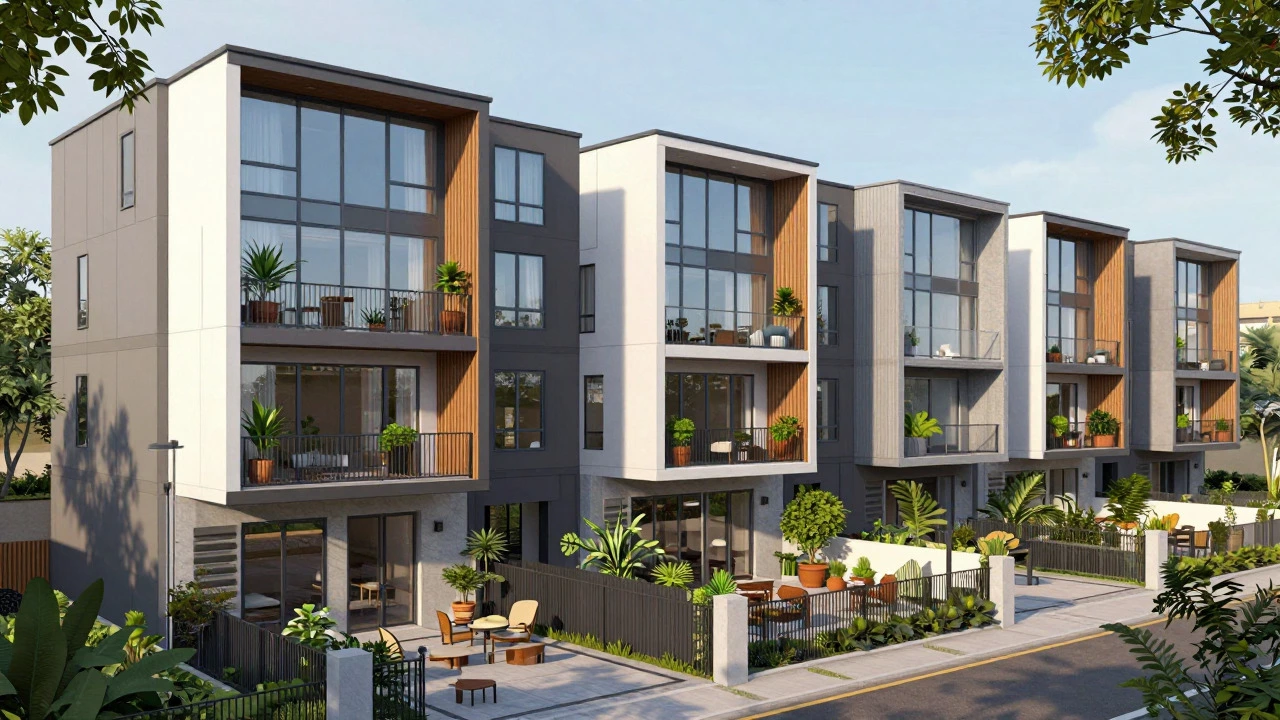
In contrast, a Townhouse is a multi-floor home that shares one or more walls with adjacent properties, typically part of a larger development or complex. Townhouses are designed to maximize density without sacrificing the feeling of having multiple levels. They usually come with a small private yard or patio, but the key differentiator is that connection to your neighbor. You might share a wall on the left, the right, or both sides, depending on whether you’re in a corner unit or a middle unit.
This structural difference drives almost every other aspect of ownership, from maintenance responsibilities to resale value. Understanding this foundation is crucial before you even look at price tags.
The Financial Breakdown: Purchase Price and Ongoing Costs
Money talks, and in real estate, it screams. Let’s break down the financial implications of choosing a villa versus a townhouse. This isn’t just about the upfront purchase price; it’s about the total cost of ownership over time.
| Cost Factor | Villa | Townhouse |
|---|---|---|
| Upfront Purchase Price | Higher (Land value included) | Lower (Less land, shared infrastructure) |
| Maintenance Responsibility | 100% Owner (Roof, garden, exterior) | Shared via Body Corporate/Strata |
| Insurance | Comprehensive Home & Contents | Contents + Strata Building Insurance |
| Utility Bills | Higher (Larger space, more energy) | Lower (Smaller footprint, efficient heating) |
| Resale Value Growth | High (Land appreciates independently) | Moderate (Tied to building quality & demand) |
When you buy a villa, you are paying for the land. In markets like Sydney, land is the primary driver of long-term wealth creation. A villa on a 600-square-meter block has inherent value because that land can be subdivided, redeveloped, or simply held as a scarce asset. Townhouses, however, sit on smaller plots, often with shared driveways or common areas. You’re paying more for the structure and less for the ground beneath it.
Then there’s the ongoing cost. With a villa, if your gutter clogs, you hire a plumber. If your fence rots, you replace it. These are unpredictable expenses that can add up. With a townhouse, you pay quarterly fees to the body corporate (or strata scheme). These fees cover the repair of shared roofs, painting of exteriors, and maintenance of communal gardens. While this feels like an extra cost, it provides budget certainty. You know exactly what you’re paying each quarter, whereas villa maintenance can be a surprise bill waiting to happen.
Lifestyle and Privacy: What Does Daily Life Look Like?
Beyond the balance sheet, the real question is: how does living in each property feel? This is where personal preference plays a massive role. Let’s look at the day-to-day realities.
Privacy and Noise: If you work from home, have young children who love to play loudly, or simply value quiet, a villa is hard to beat. Since you don’t share walls, you won’t hear your neighbor’s TV, arguments, or footsteps. In a townhouse, sound travels. Even with modern insulation, you’ll likely hear some noise from adjacent units. Corner units in townhouse complexes offer better privacy than middle units, but they still lack the complete isolation of a standalone villa.
Outdoor Space: Villas typically come with front and back yards. This is huge for families with pets or kids who need room to run around. You can install a pool, a trampoline, or a vegetable garden without asking permission. Townhouses usually offer a small rear courtyard or a balcony. It’s enough for a BBQ or a few potted plants, but not for a full-blown outdoor entertainment area. If you love gardening or hosting large outdoor gatherings, a townhouse might feel restrictive.
Community vs. Isolation: On the flip side, townhouses often foster a sense of community. You’re part of a complex with shared amenities like pools, gyms, or playgrounds. This can be appealing for singles, couples, or empty-nesters who want social interaction without the hassle of maintaining a large property. Villas can sometimes feel isolated, especially in suburban areas where houses are set far back from the street.
Maintenance and Renovation Freedom
One of the biggest hidden factors in buying property is the freedom to change it. Do you want to knock down a wall? Paint the exterior bright red? Add a second story? The answer depends heavily on whether you choose a villa or a townhouse.
With a Villa, you have near-total autonomy. As long as you comply with local council zoning laws and building codes, you can renovate, extend, or rebuild as you see fit. Want to add a granny flat? Go ahead. Want to tear down the old house and build a new one? That’s your prerogative. This flexibility adds significant value to villas, as future buyers will appreciate the potential for customization.
Townhouses, however, come with rules. Because you share walls and structures, any major renovation requires approval from the body corporate. If you want to knock down a non-load-bearing wall, you might need to ensure it doesn’t affect the structural integrity of the entire building. Exterior changes, like changing window styles or painting the facade, are often restricted to maintain the aesthetic uniformity of the complex. This lack of freedom can be frustrating for creative homeowners, but it ensures that the property retains a consistent look and protects the investment of all owners in the complex.

Investment Potential and Resale Market
If you’re buying with an eye toward the future-whether that’s selling in five years or twenty-you need to understand how these properties perform in the market.
Villas generally offer higher capital growth potential because they include land. Land is finite, especially in desirable locations. As populations grow and urban sprawl expands, land becomes more valuable. A villa allows you to benefit from this appreciation directly. Additionally, villas appeal to a broader range of buyers, including families looking for space and investors looking for rental yield stability.
Townhouses, on the other hand, are popular among first-home buyers and downsizers due to their lower entry price and low maintenance. This creates strong demand, which can drive prices up quickly in hot markets. However, the resale value of a townhouse is more dependent on the condition of the building and the management of the body corporate. If the complex falls into disrepair or has high fees, the value of individual units can stagnate or drop. Furthermore, older townhouses may face issues with outdated plumbing or electrical systems that are expensive to fix across multiple units.
Which One Should You Choose?
There’s no one-size-fits-all answer. The right choice depends on your current life stage, financial situation, and personal priorities.
Choose a Villa if:
- You prioritize privacy and quiet.
- You have a family with children or pets needing outdoor space.
- You want the freedom to renovate and customize your home.
- You are investing for long-term capital growth driven by land value.
- You are willing to handle maintenance responsibilities yourself.
Choose a Townhouse if:
- You are a first-home buyer with a limited budget.
- You prefer low-maintenance living and don’t want to mow lawns.
- You value community amenities like pools or gyms.
- You are downsizing and want to reduce your living space.
- You live in a high-density urban area where land is scarce.
Ultimately, visiting both types of properties is essential. Walk through a villa and imagine spending weekends fixing fences. Then walk through a townhouse and imagine sharing a wall with someone else. Only by experiencing both can you truly decide which lifestyle aligns with your vision of home.
Is a villa better than a townhouse for investment?
Generally, yes. Villas tend to offer better long-term capital growth because they include land, which appreciates independently of the building. Townhouses are subject to body corporate fees and shared maintenance, which can limit upside potential. However, townhouses can offer higher rental yields in certain urban markets due to lower purchase prices and appeal to tenants seeking low-maintenance living.
What are the disadvantages of living in a townhouse?
The main disadvantages include shared walls, which can lead to noise issues, and restrictions on renovations imposed by the body corporate. You also have less outdoor space compared to a villa, and you must pay regular strata fees for maintenance of common areas. Additionally, resale value can be affected by the overall condition and management of the entire complex.
Can I renovate a townhouse without permission?
Usually, no. Most townhouse complexes require approval from the body corporate or strata committee for any structural changes, exterior modifications, or even significant interior renovations that might affect neighbors. Always check the bylaws of the specific complex before purchasing to understand the level of control you will have.
Are villas more expensive to insure?
Yes, typically. Villa owners need comprehensive home insurance that covers the entire structure, contents, and liability. Townhouse owners usually only need contents insurance and personal liability coverage, as the building structure is insured by the body corporate. However, townhouse owners still pay for this building insurance indirectly through their strata fees.
Which property type holds value better during a market downturn?
Villas generally hold value better during market downturns because land value tends to be more stable than building value. In a recession, people may trade down from larger homes, but the underlying land still retains significant worth. Townhouses, being primarily structures on small lots, can be more sensitive to economic shifts and construction quality issues.