
Virginia Tenant Occupancy Calculator
Property Details
Enter details to see results
Note: This tool provides estimates based on general public codes. Always verify with your specific lease agreement and local zoning laws. Landlords may enforce stricter limits than the law requires.
You found the perfect rental property in Virginia. The rent is affordable, the location is convenient, and it has enough bedrooms for your growing family or group of friends. But before you sign that lease, a critical question pops up: exactly how many people can legally live in this house? You might think the answer is simple-just count the beds. It’s not. Ignoring local housing codes can lead to eviction notices, fines, or even being forced to move out with no recourse.
There is no single "statewide" number for tenant limits in Virginia. Instead, the rules are a patchwork of state statutes, county ordinances, and city codes. What works in Arlington might be illegal in Fairfax County. Understanding these distinctions is the difference between a stable home and a legal nightmare. Let’s break down how occupancy is calculated, where the laws stand, and what landlords actually enforce.
The Two-Per-Room Rule: The National Standard
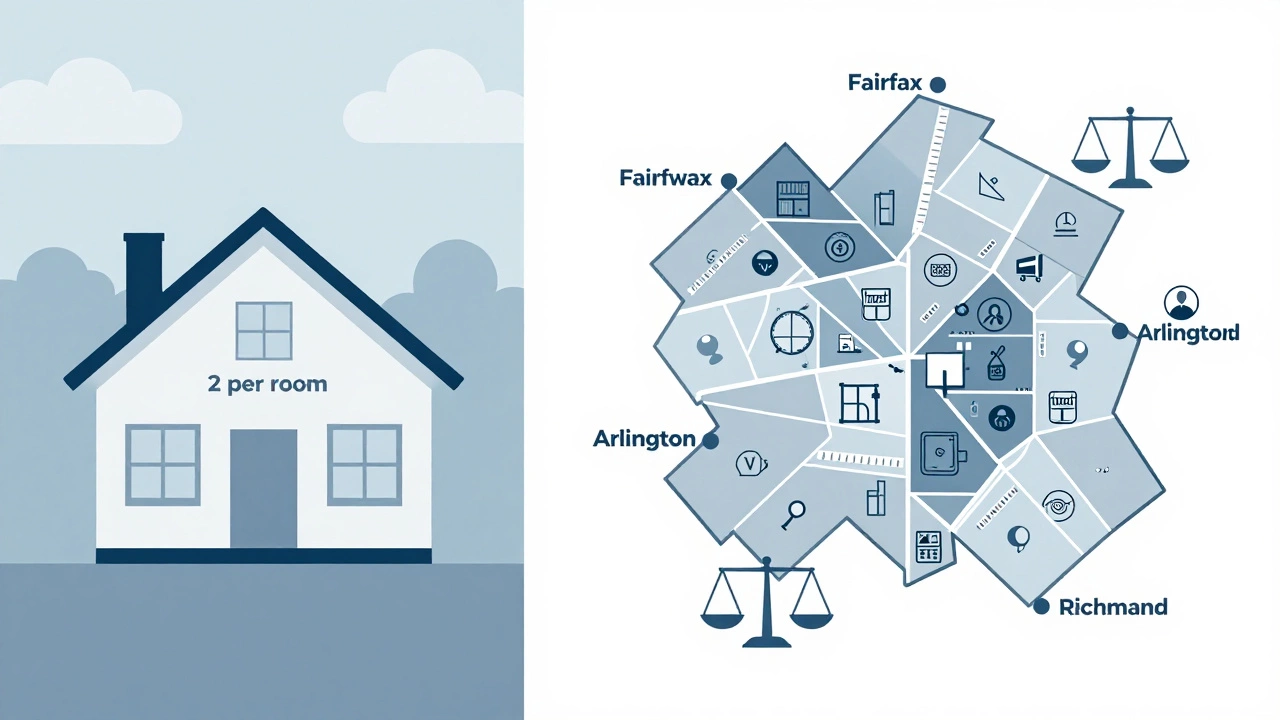
Most jurisdictions in the United States, including many in Virginia, rely on a standard known as the Two-per-room rule. This isn’t a federal law, but it is the baseline used by most local housing authorities and derived from the International Property Maintenance Code (IPMC). Under this general guideline, a maximum of two occupants are allowed per sleeping area. A "sleeping area" is defined as any room suitable for use for sleeping purposes, such as a bedroom. Living rooms, dining rooms, and kitchens do not count as sleeping areas unless they are specifically designed and equipped for sleeping (like a studio apartment).
So, if you have a three-bedroom house, the math seems easy: 3 bedrooms x 2 people = 6 tenants. However, this is where it gets tricky. Localities often add stricter layers on top of this basic formula. Some cities cap the total number of unrelated adults who can share a dwelling, regardless of bedroom count. Others define "family" units differently, which impacts how many people can claim residency without violating zoning laws.
Local Ordinances Trump State Guidelines
In Virginia, local governments have significant authority to set their own occupancy standards through Housing codes. These codes are enforced by local building departments or code enforcement officers. If you violate them, you aren’t just breaking a lease clause; you are violating municipal law.
| Jurisdiction | General Rule | Key Restrictions |
|---|---|---|
| Fairfax County | 2 persons per bedroom + 1 common area | Strict enforcement on unrelated adults; requires permits for some multi-family setups. |
| Arlington County | Based on square footage and bedrooms | Uses the IPMC standard: 70 sq ft per person in first bedroom, 50 sq ft in additional bedrooms. |
| Richmond City | 2 persons per bedroom | Additional restrictions may apply to boarding houses vs. single-family rentals. |
| Virginia Beach | 2 persons per bedroom | Requires registration for rental properties; strict on short-term vs. long-term occupancy. |
Notice the nuance in Arlington County. They don’t just count heads; they measure space. If a bedroom is tiny, it might only legally accommodate one person based on square footage requirements. This means a "three-bedroom" house might only legally hold five people if one bedroom is under-sized. Always check the specific code for the city or county where the property sits. You can usually find these documents on the local government’s website under "Code Enforcement" or "Building Services."
Landlord Leases vs. Legal Codes
Here is a common trap: your landlord might write into the House rent agreement that only four people can live in a six-bedroom house. Is that legal? Yes, but with caveats. Landlords have the right to set reasonable occupancy limits in their leases to protect their property from excessive wear and tear. However, they cannot discriminate against families with children due to the Fair Housing Act.
If a landlord sets a limit lower than the local housing code allows, they must apply it consistently to all tenants. For example, if they say "max 4 people," they can’t allow four unrelated adults but reject a family of four with two small children. That would be considered familial status discrimination. Conversely, if the local code says max 6, and the lease says max 4, the lease terms generally govern the contractual relationship, provided they don’t violate civil rights laws. You agreed to the limit when you signed. Moving in a seventh person could be grounds for eviction for breach of contract, even if the city doesn’t care.
The Impact of Unrelated Adults vs. Families
Many Virginia municipalities distinguish between "family" households and "non-family" households. A family household typically includes related individuals (parents, children, siblings) and sometimes a limited number of unrelated guests or caregivers. Non-family households consist of unrelated adults sharing a residence.
Zoning laws often restrict non-family households more strictly. In some suburbs, a single-family zoned lot cannot house more than three or four unrelated adults, regardless of how many bedrooms exist. This is done to maintain neighborhood character and reduce traffic or noise. If you are planning to rent a house with several college students or young professionals, check the zoning designation. If the property is zoned R-1 (single-family residential), there may be a hard cap on the number of unrelated occupants. Violating this can result in the city issuing cease-and-desist orders, forcing everyone to leave.
Consequences of Overcrowding
What happens if you exceed the limit? The consequences vary depending on who finds out.
- Code Enforcement Fines: If neighbors complain about noise, trash, or parking, code enforcement may inspect the property. If they find overcrowding, they will issue a violation notice. The landlord is usually fined, but they will likely pass that cost to you or evict you to avoid future issues.
- Eviction: Most leases include an "overcrowding" clause. Exceeding the stated limit is a material breach of the lease. The landlord can serve a 30-day unconditional quit notice or a 30-day cure-or-quit notice, depending on Virginia state law and the specific lease terms.
- Safety Hazards: Overcrowding strains plumbing, electrical systems, and HVAC. If a fire occurs and insurance investigators find the occupancy exceeded code, the policy might be voided. This leaves tenants and landlords liable for massive damages.
How to Verify Occupancy Limits Before Signing
Don’t guess. Do your homework. Here is a practical checklist to ensure you stay compliant:
- Read the Lease Carefully: Look for clauses titled "Occupancy," "Guests," or "Overcrowding." Note the specific number listed.
- Check Local Zoning: Visit the county or city planning department website. Search for "occupancy standards" or "housing code." Look for sections on "maximum density" or "dwelling unit definitions."
- Measure the Bedrooms: If the local code uses square footage (like Arlington), measure each bedroom. Ensure each occupant has at least 70 square feet in the primary bedroom and 50 square feet in secondary bedrooms.
- Ask About Zoning Type: Ask the landlord or agent if the property is zoned for single-family use only. If so, ask if there are restrictions on the number of unrelated adults.
- Consult a Local Attorney: If you are setting up a large shared living arrangement, spend $200-$500 on a consultation with a local real estate attorney. It’s cheaper than an eviction lawsuit.
Special Cases: Accessory Dwelling Units (ADUs)
Virginia has been increasingly friendly toward Accessory Dwelling Units (ADUs), also known as granny flats or backyard cottages. As of recent legislative updates, homeowners in many jurisdictions can build ADUs to generate rental income. However, occupancy limits still apply to the main house and the ADU separately. You cannot simply combine the occupancy limits. If the main house allows 6 people and the ADU allows 2, the total property occupancy is 8, but they must be distinct living units. Mixing them into one giant household might violate zoning separation requirements.
Is there a statewide law in Virginia limiting the number of tenants?
No, there is no single statewide statute that sets a universal number for tenant limits. Virginia defers to local counties and cities to establish housing codes and occupancy standards through their respective ordinances. While the state provides frameworks for health and safety, the specific numbers are determined locally.
Can a landlord refuse to rent to a large family?
A landlord cannot discriminate against families with children under the Fair Housing Act. However, they can enforce legitimate occupancy limits based on local housing codes (e.g., square footage per person). If a family exceeds the legal capacity of the unit due to size, the landlord may deny the application, but they must apply the same standard to all applicants, including groups of unrelated adults.
What defines a "bedroom" for occupancy calculations?
A bedroom is typically defined as a room with a window for emergency egress, a door for privacy, and sufficient closet space or storage. Living rooms, dens, or finished basements without windows generally do not count as bedrooms for legal occupancy limits unless local codes explicitly allow them as sleeping areas.
Do guests count toward the occupancy limit?
Short-term guests usually do not count toward the permanent occupancy limit. Most leases allow for temporary visitors. However, if a guest stays for an extended period (often defined as 14-30 consecutive days or more), they may be considered a resident. At that point, they must be added to the lease, and the total headcount must remain within legal and contractual limits.
What happens if I accidentally exceed the limit?
If you realize you have exceeded the limit, communicate with your landlord immediately. In some cases, they may grant a temporary waiver or help you find a larger unit. Ignoring the issue risks eviction for lease violation or fines from code enforcement if reported by neighbors. Proactive communication is always better than reactive defense.