
Commercial Property Investment Matchmaker
Answer three questions about your investment profile to discover which commercial property sector aligns best with your goals.
Why this recommendation?
You’re staring at a spreadsheet with three tabs open. One shows a shiny new office tower in the CBD promising steady rents. Another lists a gritty industrial warehouse on the outskirts with double-digit growth potential. The third? A charming but risky retail shopfront that’s seen two tenants leave in eighteen months. Which one actually puts money in your pocket without keeping you up at night?
There is no single "best" type of commercial property. It depends entirely on your risk appetite, capital, and how much time you want to spend managing headaches. But if you’re looking for clarity amidst the noise, we need to break down the four main pillars: Office, Retail, Industrial, and Hospitality. Each has distinct rules, risks, and reward structures.
Key Takeaways
- Industrial/Warehousing: Currently the top performer due to e-commerce demand and supply shortages; offers lower management intensity.
- Office: High volatility post-pandemic; best for value-add strategies rather than passive holding unless located in prime Tier-1 locations.
- Retail: Highly location-dependent; neighborhood essentials (grocery, pharmacy) outperform fashion-heavy high streets.
- Hospitality: Highest operational complexity; requires active management or a strong operator partnership to succeed.
- Decision Factor: Your choice should align with your desired level of involvement and local economic trends, not just current yield numbers.
The Industrial Boom: Why Warehouses Are Winning
If you ask most investors today where the momentum is, they’ll point to industrial property. This category includes warehouses, logistics hubs, and distribution centers. Unlike offices, which have struggled with remote work shifts, industrial spaces are booming because online shopping isn’t going away. Every Amazon package, every grocery delivery, needs a roof before it reaches your door.
The appeal here is simplicity. Tenants like logistics companies don’t care about marble lobbies or aesthetic views. They care about ceiling height, dock doors, and proximity to highways. If you buy a modern facility with clear spans and good access, tenant turnover is low. These leases often run for five to ten years, providing stable cash flow. Plus, maintenance costs are generally lower than retail or hospitality. You aren’t fixing broken espresso machines or repainting lobby walls every year.
However, location still matters. A warehouse in a dead zone with poor transport links is a liability. Look for sites near major freight corridors or last-mile delivery zones in growing suburbs. In Sydney, areas like Western Sydney Parklands or Eastern Creek have seen significant appreciation due to infrastructure upgrades. The risk? Oversupply in specific micro-markets can soften rents, so check vacancy rates carefully before committing.
Retail Real Estate: Essentials Over Trends
Retail used to be the golden child of commercial real estate. Now, it’s a minefield. The difference between success and failure lies in what is being sold. Retail property splits into two camps: discretionary and essential. Discretionary retail includes fashion boutiques, electronics stores, and cinemas-things people cut when budgets tighten. Essential retail covers supermarkets, pharmacies, childcare centers, and medical clinics.
Essential retail properties tend to hold their value better during downturns. People still need toothpaste and prescriptions even in a recession. However, the entry price is higher because these assets are safer. You might pay a premium yield compression, meaning a lower percentage return but higher stability. Conversely, a vacant fashion store in a struggling mall could offer a massive discount, but turning it around requires heavy leasing effort and fit-out costs.
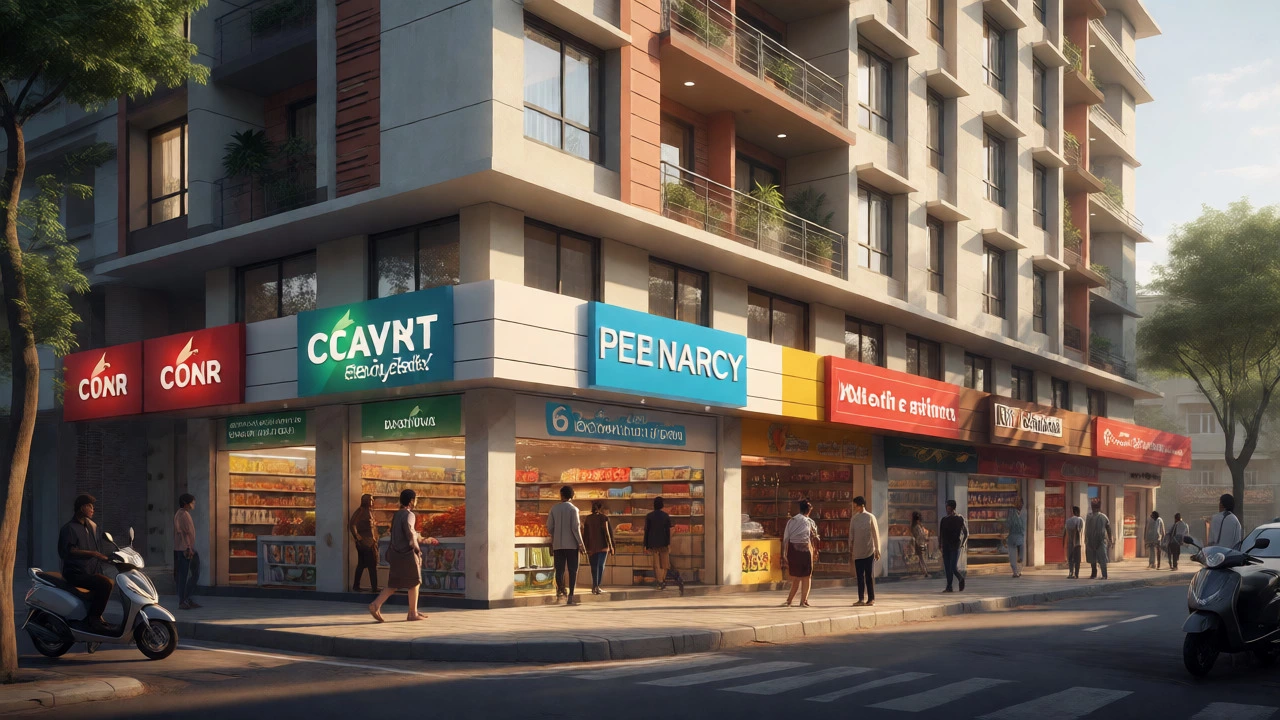
Consider the rise of mixed-use developments. Ground-floor retail integrated with residential apartments creates captive audiences. A café below an apartment block has guaranteed morning traffic. This synergy reduces reliance on foot traffic from strangers. When evaluating retail, look at the anchor tenants. Is there a reliable grocery store nearby? That draws consistent crowds. If the center relies solely on individual small businesses, the risk multiplies.
Office Space: The Value-Add Play
The office market is polarized. We have "flight to quality," where companies pay premiums for modern, green-certified buildings with excellent amenities, while older, inefficient stock sits empty. Buying a tired 1990s office block hoping for organic rent growth is dangerous. The best strategy now is value-add: buy underperforming assets, upgrade them with smart technology, improve energy efficiency, and re-lease to tech or professional services firms.
Hybrid work models mean desks are shared more frequently. This changes the square footage requirements. Companies need less total space but better quality per employee. Therefore, smaller, flexible co-working spaces or boutique offices with collaborative zones are gaining traction over traditional cubicle farms. Investors who understand this shift can capture higher yields by catering to startups and SMEs who reject corporate rigidity.
Beware of lease expirations. Office leases are long-term commitments. If you buy a building with 80% occupancy but all leases expire in six months, you face immediate vacancy risk. Always audit the WALT (Weighted Average Lease Term). A healthy WALT of 5+ years provides security. Anything under 3 years signals trouble ahead unless you have a solid re-leasing plan.
Hospitality: High Risk, High Reward
Hospitality property encompasses hotels, motels, and short-term rentals. This sector is intensely cyclical and operationally heavy. Unlike other types, revenue here fluctuates daily based on seasonality, events, and global travel trends. You aren’t just collecting rent; you’re running a business within a building.
The upside? During peak tourism seasons, nightly rates can skyrocket, generating returns far exceeding standard commercial yields. The downside? Downturns hit hard. A pandemic, a border closure, or a local event cancellation can wipe out profits overnight. Most investors avoid direct hotel ownership unless they have industry expertise. Instead, they opt for managed arrangements where operators handle staffing and marketing while owners receive profit shares or fixed rents.
Short-term rental platforms like Airbnb have blurred the lines between residential and hospitality. While lucrative, regulatory scrutiny is increasing in many cities, including Sydney. Check local council laws before buying an apartment complex intending to use it for short stays. Zoning restrictions can change overnight, turning a profitable asset into a restricted one.
| Property Type | Management Intensity | Tenant Stability | Growth Potential | Risk Level |
|---|---|---|---|---|
| Industrial/Warehouse | Low | High | High | Moderate |
| Retail (Essential) | Moderate | High | Moderate | Low-Moderate |
| Office (Prime) | High | Moderate | Variable | High |
| Hospitality | Very High | Low | High | Very High |

How to Choose Based on Your Profile
Deciding which type is "best" comes down to matching the asset to your personal constraints. Ask yourself these three questions:
- How much time do I have? If you have a full-time job elsewhere, avoid hospitality and heavy retail. Go for industrial or triple-net leased properties where the tenant pays for taxes, insurance, and maintenance.
- What is my capital capacity? Industrial properties often require larger upfront capital due to land size. Smaller retail units or strata-titled offices allow for lower entry points.
- Am I comfortable with volatility? If you sleep well knowing your income won’t drop 30% in a bad quarter, stick to essential retail or long-lease industrial. If you chase maximum returns and can stomach swings, look at hospitality or value-add office plays.
Remember, diversification is key. Don’t put all your eggs in one basket. A portfolio mixing one industrial asset for stability and one retail unit for growth can balance risk effectively. Also, consider the macro environment. Interest rates impact borrowing costs differently across sectors. Higher rates hurt leveraged buyers, making cash-flow-positive assets like established industrial sheds more attractive than speculative development projects.
Frequently Asked Questions
Which commercial property type has the highest yield?
Typically, hospitality and secondary retail offer the highest headline yields, often ranging from 7% to 10%. However, these come with higher operational costs and vacancy risks. Industrial properties usually offer lower yields (4%-6%) but provide greater capital growth and stability, resulting in better total returns over time.
Is office space still a good investment in 2026?
Yes, but selectively. Prime, high-quality office spaces with green certifications and modern amenities remain in demand. Older, inefficient buildings face obsolescence. The best opportunity lies in value-add strategies: acquiring undervalued assets, renovating them to meet hybrid work standards, and securing long-term leases with creditworthy tenants.
Why is industrial property so popular right now?
The surge in e-commerce has created unprecedented demand for logistics and warehousing space. Supply hasn't kept pace with this demand, leading to low vacancy rates and rising rents. Additionally, industrial properties require less intensive management compared to retail or hospitality, appealing to passive investors seeking stable cash flows.
What are the biggest risks in commercial property investment?
Vacancy risk is paramount. Unlike residential leases, commercial tenants can take months to find replacements, causing significant income loss. Other risks include interest rate fluctuations affecting debt servicing, zoning changes altering permitted uses, and structural issues requiring unexpected capital expenditure. Due diligence on lease terms and tenant creditworthiness is critical.
Can I convert a retail shop into an office?
It depends on local zoning laws and building regulations. Many councils restrict conversions to maintain street vibrancy. You must apply for a change of use permit. Costs involve modifying entrances, restrooms, and fire safety compliance. Always consult a town planner before purchasing a retail unit with conversion intent.