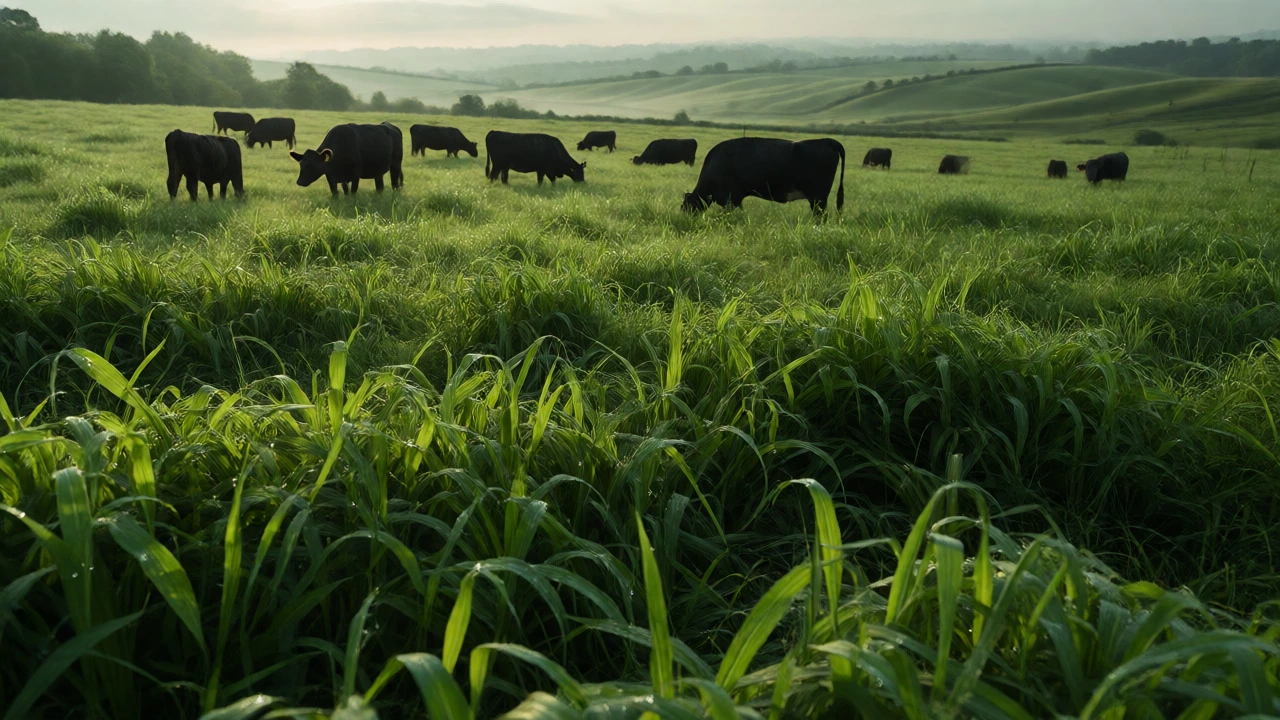
Pasture Carrying Capacity Calculator
Determine the realistic number of cattle (Animal Units) your land can sustain. Adjust for climate zone and management style to see how rotational grazing impacts your herd size.
Animal Units (AU)
You bought the land. Maybe it was a steal at $3,500 an acre in rural Texas, or maybe you paid a premium for that lush green patch in Vermont. Now you’re standing in your empty field, looking at the horizon, and thinking: "I want cows." But how many can you actually put out there without turning your beautiful pasture into a muddy, overgrazed disaster zone?
The short answer is: probably fewer than you think. The long answer involves soil health, rainfall, grass species, and whether you plan to buy hay all winter. Let’s break down exactly how many cows can be supported on 20 acres of land, depending on where you live and how you manage your grass.
The Magic Number: Animal Unit Equivalents (AUE)
Farmers don’t count heads; they count Animal Units a standard measure representing one mature cow with her calf. Why? Because a 1,400-pound beef steer eats way more than a 900-pound dairy heifer. If you try to stock based on headcount alone, you’ll run out of grass by mid-summer.
One Animal Unit (AU) equals one mature cow (about 1,000 lbs) plus her calf up to weaning. This cow consumes roughly 26 pounds of dry matter per day. That’s about 2% to 3% of her body weight daily. If you have two calves under six months old, that’s still just one AU. But if you add a bull? He counts as 1.5 AUs. Horses? One horse is usually calculated as 1.2 to 1.5 AUs depending on breed.
So when you ask "how many cows," you’re really asking "what is my carrying capacity in AUs?" For most temperate regions with decent rainfall, the rule of thumb is one AU per 1.5 to 2 acres of good quality pasture. But this number swings wildly based on climate.
Climate Is Your Boss, Not Your Land Size
Acreage means nothing if it doesn’t rain. In humid zones like the Southeastern US or parts of Europe, grass grows fast and thick. You might get away with one AU per acre. In arid zones like West Texas or the Australian Outback, you might need 20 acres per AU. Yes, twenty. On 20 acres in a drought-prone area, you might support exactly one cow-calf pair.
Here’s a realistic breakdown by region:
| Region Type | Annual Rainfall | Acres per AU | Max Cows on 20 Acres |
|---|---|---|---|
| Humid/Tropical | > 40 inches | 0.5 - 1.0 | 20 - 40 |
| Temperate/Rainfed | 20 - 40 inches | 1.5 - 2.5 | 8 - 13 |
| Semi-Arid/Dryland | 10 - 20 inches | 5 - 10 | 2 - 4 |
| Arid/Desert | < 10 inches | 15+ | 1 |
If you are in a temperate zone-say, the Midwest US, UK, or Southern Australia-you’re likely looking at supporting 8 to 12 cows on 20 acres if you manage the grass well. If you do nothing but let them roam free, you’ll probably end up with 4 to 6 skinny cows by fall.
Continuous Grazing vs. Rotational Grazing
This is where most beginners fail. They fence off the whole 20 acres, throw in 10 cows, and walk away. This is called continuous grazing. The problem? Cows eat their favorite plants first. They trample the rest. By August, the best grass is gone, the weeds take over, and your soil compacts. You’re now buying hay in September.
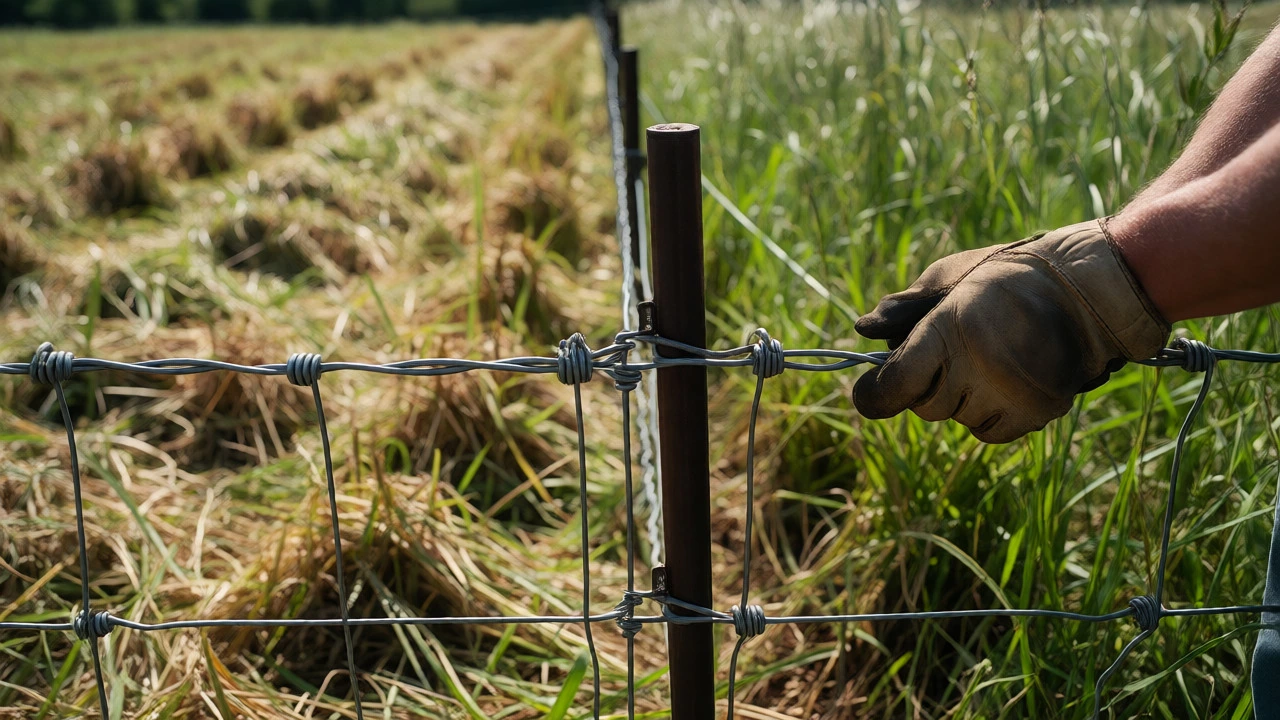
Rotational grazing moving livestock between paddocks to allow grass recovery changes the math entirely. By dividing your 20 acres into 10 smaller paddocks of 2 acres each, you move the herd every few days. The grazed paddock rests for 30-45 days while the next one gets eaten. This allows deep root growth and higher biomass production.
With proper rotational grazing, you can often double your stocking rate. Instead of 8 cows, you might support 15 or even 20 light-frame cattle. It requires more labor-moving fences or gates-but it saves thousands in feed costs and keeps your soil healthy.
Grass Quality Matters More Than Quantity
Not all grass is created equal. Native prairie grasses in North America are tough, fibrous, and lower in protein. Improved pastures seeded with tall fescue, orchardgrass, or clover mixtures are much more nutritious. Clover adds nitrogen to the soil and boosts protein content, which helps cows gain weight faster.
If your 20 acres is mostly native scrub or invasive weeds, your carrying capacity drops significantly. You might only get half the animals compared to a well-managed improved pasture. Before you buy cattle, spend a summer observing what grows naturally. Talk to local extension agents. They know exactly which grasses thrive in your specific county.
The Winter Reality Check
Summer looks great. Green grass everywhere. But what happens in January? If you live north of the Mason-Dixon line, your grass stops growing from November to March. Do you have enough hay stored to feed those 10 cows through winter?
Hay production on 20 acres depends on yield. A good yield is 3 tons of dry hay per acre per year. So, 20 acres could theoretically produce 60 tons of hay. One cow eats about 2.5% of her body weight in hay daily. A 1,000 lb cow needs 25 lbs/day. Over 120 days of winter, she eats 3,000 lbs (1.5 tons). So, 60 tons of hay supports 40 cows for winter. Sounds plenty, right?
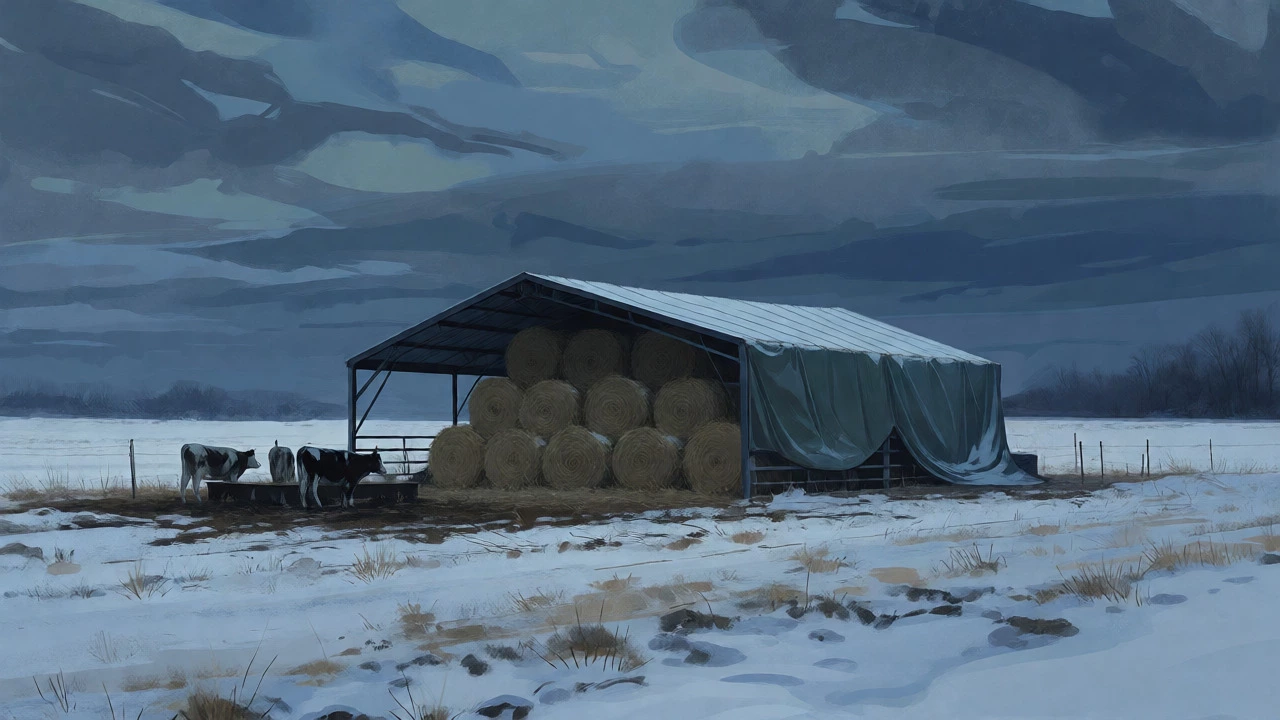
Wrong. First, you rarely get perfect yields every year. Second, harvesting machinery costs money. Third, storing 60 tons of hay requires barn space or tarps. Fourth, you need leftover grass for spring calving. A safer bet is to assume you can store enough hay for 10-15 cows max on 20 acres, assuming you harvest everything yourself and have no major droughts.
Infrastructure Costs You Haven’t Thought About
Cows don’t just eat grass. They need water, shade, and fencing. Water is critical. A lactating cow drinks 15-20 gallons a day. Ten cows drink 200 gallons daily. If you don’t have a pond or well, you’ll be hauling water, which kills your profit margins.
Fencing is another upfront hit. High-tensile wire fencing costs about $1,500-$2,500 per mile installed. To rotate graze effectively on 20 acres, you might need 2-3 miles of internal fencing. That’s a $5,000 investment before you buy a single cow. Don’t forget handling facilities-a squeeze chute and holding pens cost another $2,000-$5,000 used.
Profitability: Can You Make Money?
Let’s be honest. 20 acres is a hobby farm size, not a business size. Here’s the math for a typical scenario in a temperate zone:
- Stocking Rate: 10 cow-calf pairs.
- Weaned Calves: Assume 90% survival, so 9 calves sold.
- Weight: Average 500 lbs per calf.
- Price: $1.80/lb (market dependent).
- Gross Income: 9 calves x 500 lbs x $1.80 = $8,100.
Now subtract expenses:
- Vet bills, vaccines, dewormer: $50/head = $500.
- Bull rental or replacement: $1,000.
- Hay supplementation (winter): $2,000.
- Fence repair/maintenance: $500.
- Miscellaneous (fuel, tools): $500.
- Total Expenses: ~$4,500.
Net Profit: $3,600. That’s $180 per acre. If you value your own labor at minimum wage, you’re losing money. This isn’t a job; it’s a lifestyle choice with tax benefits. To make real money, you need either higher stocking rates via intensive management, direct sales to consumers (selling beef directly), or adding other enterprises like chickens or agritourism.
Common Mistakes Beginners Make
Don’t buy too many cows too soon. Start with 2-3 pairs. Learn how they behave, how the grass responds, and what your local market pays. Expand slowly.
Second, ignore the bull ratio. One bull can service 25-30 cows. Don’t buy two bulls for 10 cows unless you’re doing controlled breeding schedules. Bulls are expensive and aggressive.
Third, forget about mineral supplements. Grass alone doesn’t provide all necessary minerals, especially phosphorus and copper. Provide free-choice mineral blocks designed for cattle. It’s cheap insurance against poor performance.
Finally, test your soil. If your pH is low, grass won’t grow well regardless of rainfall. Lime application might cost $200 per acre but can double your forage yield. It’s the highest ROI input you can make.
Can I keep horses instead of cows on 20 acres?
Yes, but adjust the numbers. Horses require more careful management because they tend to overeat rich grass, leading to laminitis. Generally, one horse equals 1.2 to 1.5 animal units. On 20 acres in a temperate zone, you could support 6-8 horses comfortably with rotational grazing. Ensure you have safe fencing, as horses are more prone to injury than cattle.
Do I need a barn for 10 cows?
Not necessarily. Most hardy breeds of beef cattle tolerate cold weather well if they have windbreaks and dry bedding areas. However, you will need shelter for calving season if temperatures drop below freezing, and you definitely need a place to store hay and equipment. A simple three-sided pole barn is often sufficient and much cheaper than a full enclosed structure.
What breed is best for small acreage?
Smaller-framed breeds are ideal for limited land because they consume less forage. Angus are popular for their meat quality and docility. Dexter cattle are miniature and perfect for hobby farms, requiring only half the feed of a standard cow. Highland cattle are hardy and can handle rougher terrain and poorer forage, making them suitable for marginal lands.
How much does it cost to start a cow farm on 20 acres?
Initial setup varies widely. Expect to spend $5,000-$10,000 on fencing, water systems, and basic handling equipment. Cattle themselves cost $1,000-$1,500 per head. So, starting with 5 cows would cost roughly $10,000-$17,500 total. This excludes land purchase price and any major infrastructure like wells or new barns.
Can I sell beef directly from 20 acres?
Yes, and it’s highly recommended for small farms. Selling whole or half beef sides directly to consumers bypasses the commodity market, where prices are lowest. You can charge $4-$6 per pound hanging weight, doubling your income compared to selling weaned calves at auction. This makes 20 acres much more financially viable.