Villa vs. Townhouse Decision Calculator
Answer these questions honestly to see which property type aligns best with your needs.
Townhouse
Why this choice?
Based on your answers...
Key Considerations:
Fill out the form to get your personalized Villa vs. Townhouse recommendation.
You’re scrolling through listings, and two properties catch your eye. One is labeled a "luxury villa," the other a "modern townhouse." The price tags are similar, the floor plans look comparable, and both promise a backyard. So, what’s the actual difference? Is it just marketing fluff designed to make one sound more expensive than the other?
It’s not just marketing. While villas and townhouses often share physical traits-like multiple stories and private entrances-they belong to different legal and structural categories. Understanding these distinctions saves you from costly surprises regarding maintenance fees, land ownership, and resale value. If you are looking at villas for sale, knowing exactly what you are buying versus a townhouse changes everything about your long-term investment.
The Core Distinction: Land Ownership and Structure
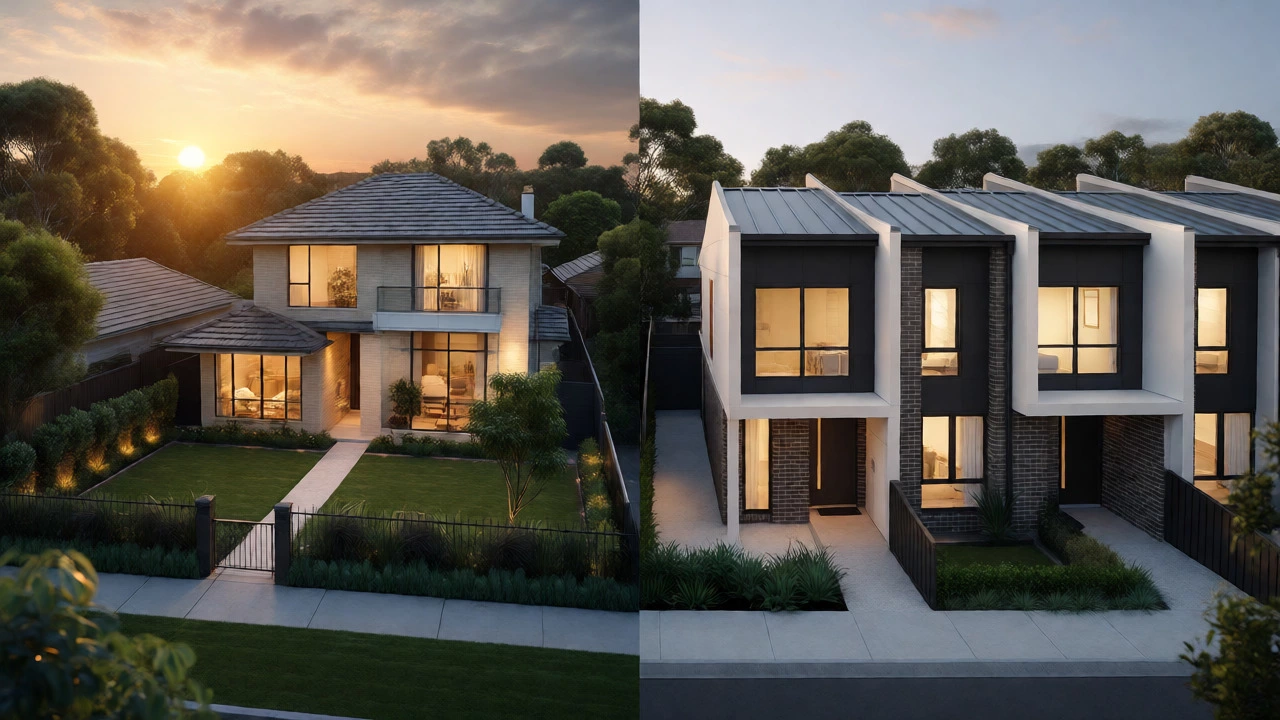
The biggest difference isn’t how the house looks; it’s what you own. When you buy a villa, you typically own the land underneath it and the structure itself. It is usually a detached or semi-detached building with its own boundaries. You have full control over the exterior, the garden, and often the ability to extend the property, subject to local council rules.
A townhouse, on the other hand, is part of a row of identical or mirror-image houses that share side walls. In most jurisdictions, particularly in Australia where this distinction is critical, owning a townhouse often means you own the structure but not necessarily the land in the same freehold sense as a villa. Many townhouses are sold under strata title schemes. This means you own your unit, but you share ownership of common areas like driveways, gardens, and pools with your neighbors.
| Feature | Villa | Townhouse |
|---|---|---|
| Land Ownership | Usually Torrens Title (Freehold) | Often Strata Title (Shared) |
| External Walls | Detached or Semi-Detached | Attached to neighbors |
| Maintenance | Owner responsible for all repairs | Strata committee manages common areas |
| Fees | No body corporate fees | Quarterly strata levies required |
| Privacy | High (no shared walls) | Moderate (shared walls/noise transfer) |
Why Strata Fees Matter More Than You Think
If you choose a townhouse, you are signing up for a community management system. This is called a Body Corporate or Owners Corporation. Every quarter, you pay a levy. These fees cover insurance for the building, cleaning of common areas, landscaping, and maintenance of shared facilities like pools or gyms.
Villas rarely have these fees because there are no shared walls or common areas to maintain. You mow your own lawn, you fix your own roof, and you pay your own insurance. At first glance, avoiding strata fees seems like a win. But consider this: if the roof leaks on a townhouse, the strata fund pays for it. On a villa, that $15,000 repair bill hits your bank account directly. For some buyers, the predictability of strata fees is actually a financial benefit, even if it feels like an extra cost.
Here is a quick rule of thumb: Calculate the annual strata fee as a percentage of the property price. If it exceeds 1% annually, investigate why. High fees can signal poor management or aging infrastructure that will require special levies later.
Design and Space Efficiency
Architecturally, villas tend to offer more flexibility. Because they aren’t attached to neighbors, architects can design wider frontages and larger setbacks. This allows for bigger courtyards, double garages, and better natural light circulation. You can often install solar panels, air conditioning units, or external cladding without needing permission from a neighbor or a strata committee.
Townhouses are built for density. They maximize land use by stacking living spaces vertically and sharing party walls. This makes them cheaper per square meter in many urban areas. However, this efficiency comes at a cost. Noise transfer is a real issue. You might hear your neighbor’s TV or footsteps above you. In a villa, silence is golden because there is no shared wall to conduct sound.
Consider the layout. A typical modern townhouse might have three bedrooms upstairs and living areas downstairs. A villa might spread those rooms across a single level or allow for a grander entrance hall. If you plan to renovate, a villa gives you freedom. Knock down a wall? Go ahead. Change the facade? Easy. With a townhouse, changing the external appearance often requires approval from the strata committee, which can be slow and bureaucratic.

Resale Value and Market Trends
Which holds value better? Historically, land appreciates faster than buildings. Since villas come with the land title, they often see stronger capital growth over time. Investors love villas because the land component is scarce, especially in inner-city suburbs of Sydney or Melbourne.
Townhouses are popular with downsizers and first-home buyers who want low-maintenance living. Their market is stable, but growth can be slower because the supply of townhouses is higher. Developers can build rows of townhouses quickly, whereas individual villas require more space and planning approvals. If you are looking for quick equity gains, a villa on a large block often outperforms a townhouse in the same suburb.
However, don’t ignore location. A luxury townhouse in a prime waterfront precinct might appreciate faster than a dilapidated villa in a less desirable street. Always compare within the specific micro-market. Look at recent sales data for similar properties within a 500-meter radius.
Lifestyle Factors: Privacy vs. Community
Ask yourself how much interaction you want with neighbors. Townhouses foster a sense of community. You might see the same people walking their dogs or using the communal pool. This can be great for families with young children or elderly residents who want social connection. Security is also often higher in townhouse complexes due to gated entries and intercom systems.
Villas offer isolation. You close your gate, and you are alone. This appeals to those who value privacy and quiet. But it also means you are solely responsible for security. If you travel often, you need to arrange for someone to check on your property. In a townhouse complex, neighbors might notice if something looks wrong.
Pets are another factor. Some strata schemes ban pets or limit them to small animals. Check the by-laws before you buy a townhouse if you have a dog. With a villa, you generally have more freedom, provided you adhere to local council leash laws and noise ordinances.

Common Misconceptions About "Villas"
Be careful with terminology. In some regions, developers label any large, high-end townhouse as a "villa" to justify a higher price. In others, a "villa" specifically refers to a detached home. Always check the title documents. Does it say "Torrens Title" or "Strata Title"? That is the definitive answer.
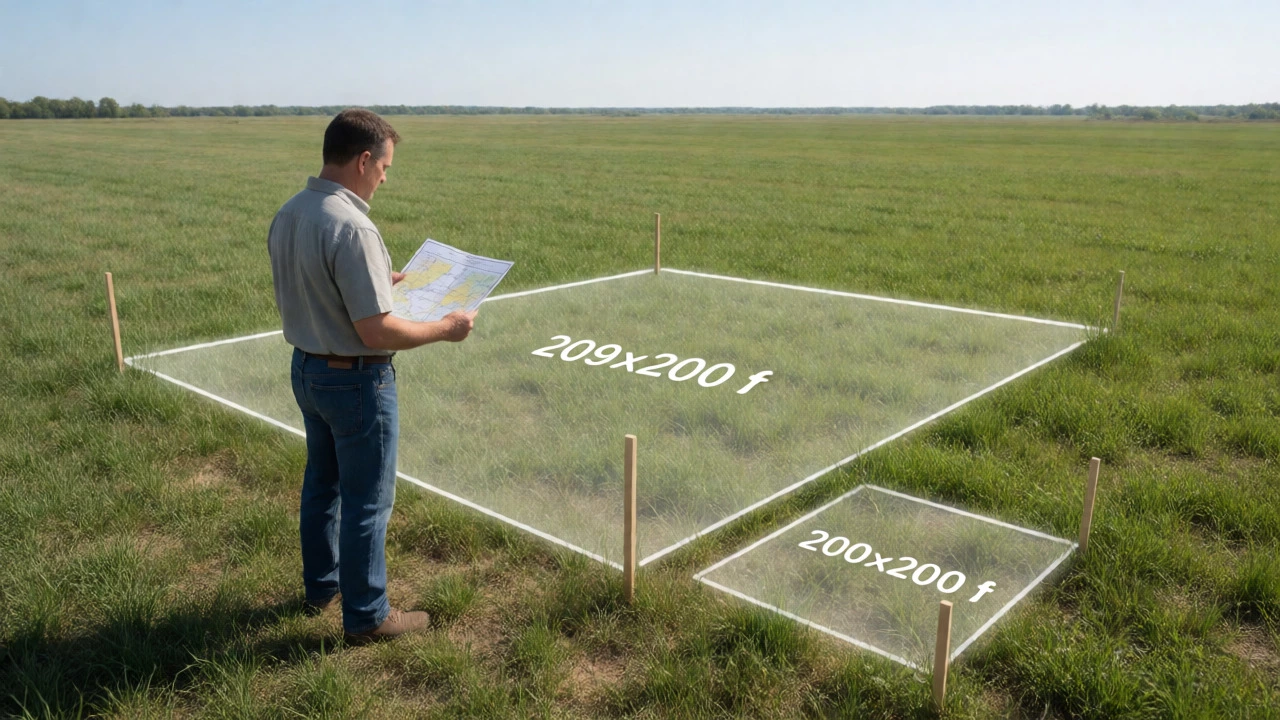
Another myth is that villas are always larger. Not true. Compact villas exist, and spacious townhouses do too. Size depends on the lot dimensions, not the label. Don’t assume a villa has a huge garden just because of its name. Measure the land area in square meters and compare it to the building footprint.
How to Decide: A Buyer’s Checklist
Still unsure? Run through this decision tree:
- Do you hate managing maintenance? Choose a townhouse. Let the strata handle the gutters and lawns.
- Do you want to renovate freely? Choose a villa. No committee approvals needed.
- Is budget tight? Townhouses are usually cheaper upfront.
- Are you investing for long-term growth? Villas with land titles usually win.
- Do you need security/gates? Townhouse complexes often provide this out of the box.
Remember, the best property is the one that fits your lifestyle, not just your wallet. A beautiful villa becomes a burden if you spend every weekend mowing a massive lawn you didn’t realize came with the purchase. Conversely, a townhouse can feel claustrophobic if you crave solitude.
Can I turn a townhouse into a villa?
Generally, no. A townhouse is defined by its attachment to neighboring structures and its strata title status. To become a villa, it would typically need to be detached and converted to Torrens title, which involves complex legal and physical changes that are rarely feasible.
Are villas always more expensive than townhouses?
Not always. While villas often command higher prices due to land ownership and privacy, a luxury townhouse in a prime location can cost more than a modest villa in a suburban area. Location and condition play significant roles in pricing.
What are strata fees used for?
Strata fees cover building insurance, maintenance of common areas (like pools, lobbies, and gardens), cleaning services, and administrative costs for the owners corporation. They do not cover internal repairs within your individual unit.
Do townhouses have backyards?
Yes, many townhouses include a small courtyard or backyard. However, the size is usually smaller than a villa's garden, and in some cases, the outdoor space may be considered common property managed by the strata scheme.
Is it harder to get a loan for a townhouse?
Lenders scrutinize townhouses more closely because of strata risks. If the building has major defects or insufficient sinking funds, banks may hesitate to lend. Villas, being standalone, carry fewer collective financial risks for lenders.