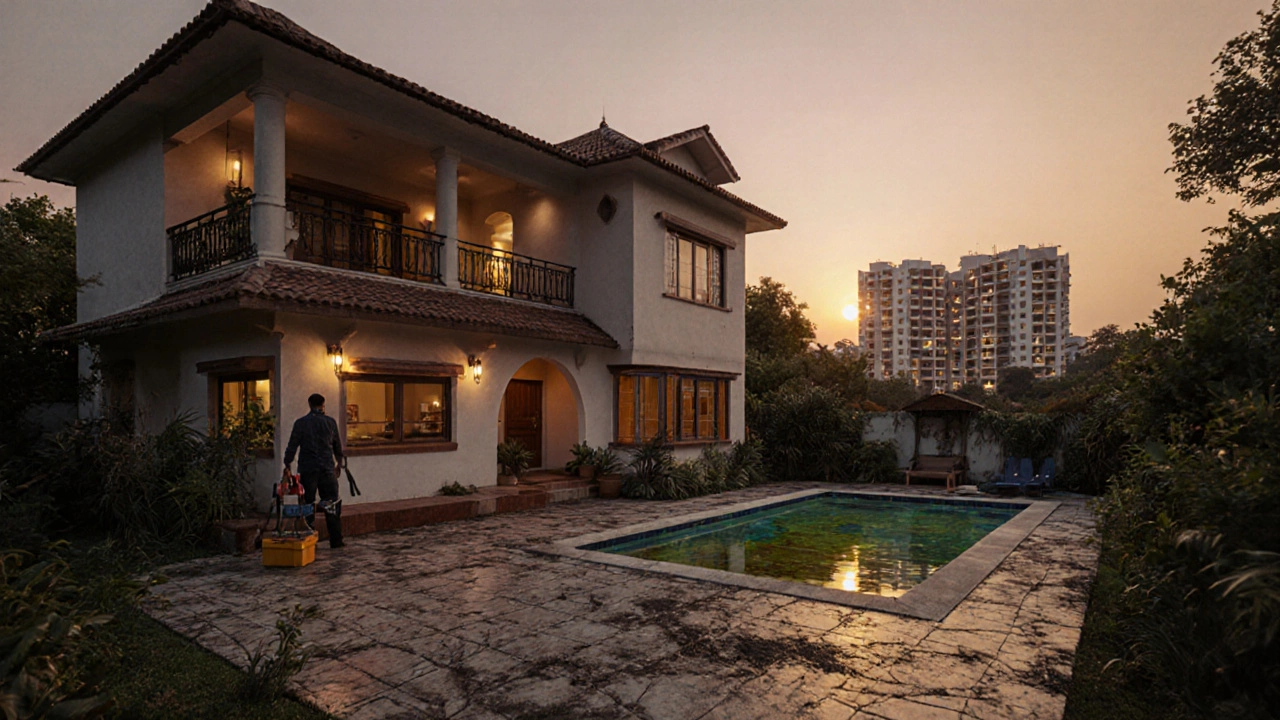
Villa Disadvantages: What No One Tells You Before Buying
When you think of a villa, a standalone luxury home, often with land, gardens, and private amenities. Also known as detached luxury residence, it’s marketed as the ultimate escape from city noise and crowded apartments. But behind the stone walls and manicured lawns, villas come with real, everyday problems most brochures skip.
One big issue? maintenance costs, the ongoing expenses of owning a large standalone property with multiple systems and outdoor areas. Unlike an apartment where the building manager handles the roof or pool, a villa puts all that on you. HVAC systems for 4,000 sq ft? Landscaping for half an acre? Security for a property with multiple entry points? These aren’t optional upgrades—they’re necessities. In places like India, where professional maintenance help isn’t always easy to find or affordable, these costs can spike unexpectedly. A single leaky pipe or broken gate motor can cost more than your monthly rent in a city apartment.
Then there’s isolation, the social and practical challenge of living far from neighbors, shops, and public transport. Villas are often built on the edges of towns, promising peace but delivering distance. Getting groceries, dropping kids at school, or grabbing coffee becomes a trip. Public transport? Usually nonexistent. Relying on a car isn’t just convenient—it’s mandatory. And if you’re away for work or travel, the silence can feel heavy. No neighbors to check in, no one to borrow sugar from. It’s quiet, yes—but quiet can also mean lonely.
And let’s talk about privacy, the trade-off between seclusion and vulnerability in a home with no shared walls or security oversight. While you might think privacy means no nosy neighbors, it also means no one nearby to notice a break-in, a fire, or a medical emergency. In an apartment, someone might hear a crash or smell smoke. In a villa, you could be inside for hours without anyone knowing. Security systems help, but they’re not foolproof—and they add to your monthly bills.
Location matters too. Many villas are sold as "serene retreats," but that often means they’re far from hospitals, schools, or even decent roads. What looks like a quiet forest view today might become a construction zone tomorrow if the area gets rezoned. And unlike buying in a well-planned colony, villa plots sometimes lack proper drainage, sewage, or reliable power backups. You might get peace, but you might also get unpredictable infrastructure.
And don’t forget resale. Villas aren’t easy to sell. Buyers are few, and they’re picky. They want the same luxury you paid for—but they also want everything to work perfectly. If your pool is old, the fence is falling, or the driveway cracks every monsoon, you’re stuck lowering the price. Apartments in cities have a steady buyer pool. Villas? You’re waiting.
So yes, villas have charm. But they’re not just bigger houses—they’re bigger responsibilities. If you’re drawn to the idea of space and quiet, ask yourself: Are you ready to manage it all? The garden, the bills, the isolation, the repairs? It’s not just about buying a home. It’s about taking on a full-time job you didn’t sign up for.
Below, you’ll find real insights from people who’ve lived through these challenges—what went wrong, what they wish they knew, and how to spot the red flags before it’s too late.