Villa Size & Plot Estimator
Analysis Results
- Enter square footage to see suggested features...
Enter your interior size and click calculate to see the analysis.
Quick Glance: Villa Size Categories
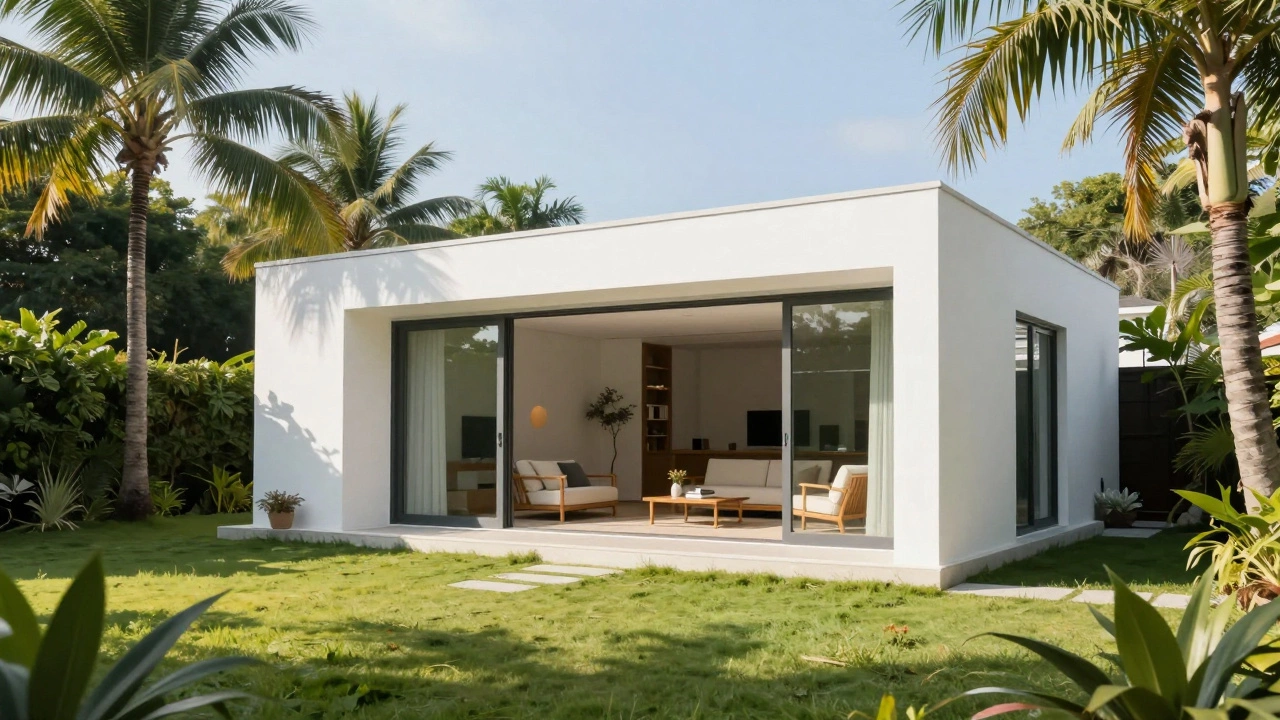
- Small/Compact Villas: 1,200 to 2,500 square feet. Ideal for small families or vacation rentals.
- Medium/Standard Villas: 2,500 to 5,000 square feet. The sweet spot for most upscale residential needs.
- Large/Luxury Villas: 5,000 to 12,000+ square feet. Massive estates with specialized rooms like cinemas and gyms.
- Ultra-Luxury Estates: 15,000+ square feet. These are essentially private resorts.
Defining the Modern Villa
To get a real handle on size, we first have to define what we're talking about. A Villa is a private residential dwelling, often detached and featuring a garden or courtyard, typically designed for luxury and leisure. Unlike a standard suburban house, a villa is characterized by its architectural independence and a strong emphasis on indoor-outdoor living.
When you see a villa for sale, the "size" isn't just about the walls. It's a combination of the built-up area (the interior rooms) and the plot area (the total land the house sits on). For example, you might find a 3,000-square-foot home sitting on a 10,000-square-foot lot. That extra space is where the luxury happens-the swimming pools, manicured lawns, and outdoor dining areas that make a villa feel significantly larger than a townhouse of the same interior square footage.
Breaking Down Size by Category
If you're shopping for a property, it helps to categorize villas by their functional scale. A small villa isn't necessarily "tiny"; it's just scaled for efficiency. These usually feature 2 to 3 bedrooms and a compact living area. You'll often find these in resort destinations where the goal is to spend more time at the beach and less time cleaning the house. The interior usually ranges from 1,200 to 2,500 square feet.
Medium-sized villas are the bread and butter of the luxury real estate market. These typically range from 2,500 to 5,000 square feet. At this scale, you start seeing a clear separation of zones. You'll have a formal living room for guests and a separate family room for lounging. Bedrooms usually include en-suite bathrooms, and the kitchen often expands into a breakfast nook or a pantry. This size is perfect for families who want enough room to breathe without feeling like they're living in a museum.
Once you cross the 5,000-square-foot mark, you've entered the realm of luxury estates. These homes aren't just about more bedrooms; they're about specialized utility. We're talking about home theaters, wine cellars, private gyms, and perhaps even a library. The layout becomes a priority here because if a house is too big without a logical flow, it feels empty and cold. In these properties, the plot size is often massive, sometimes spanning an entire acre or more, allowing for tennis courts or guest cottages.
| Villa Type | Average Interior Area | Common Bedroom Count | Key Features | Ideal User |
|---|---|---|---|---|
| Compact | 1,200 - 2,500 sq ft | 2 - 3 | Small patio, open plan | Couples, Retirees |
| Standard | 2,500 - 5,000 sq ft | 3 - 5 | Double garage, private pool | Medium-sized families |
| Luxury | 5,000 - 12,000 sq ft | 5 - 8 | Home cinema, gym, staff quarters | High-net-worth individuals |
| Estate | 15,000+ sq ft | 8+ | Guest houses, tennis courts, acreage | Dynasties, Corporate retreats |
The Impact of Architectural Style on Perceived Size
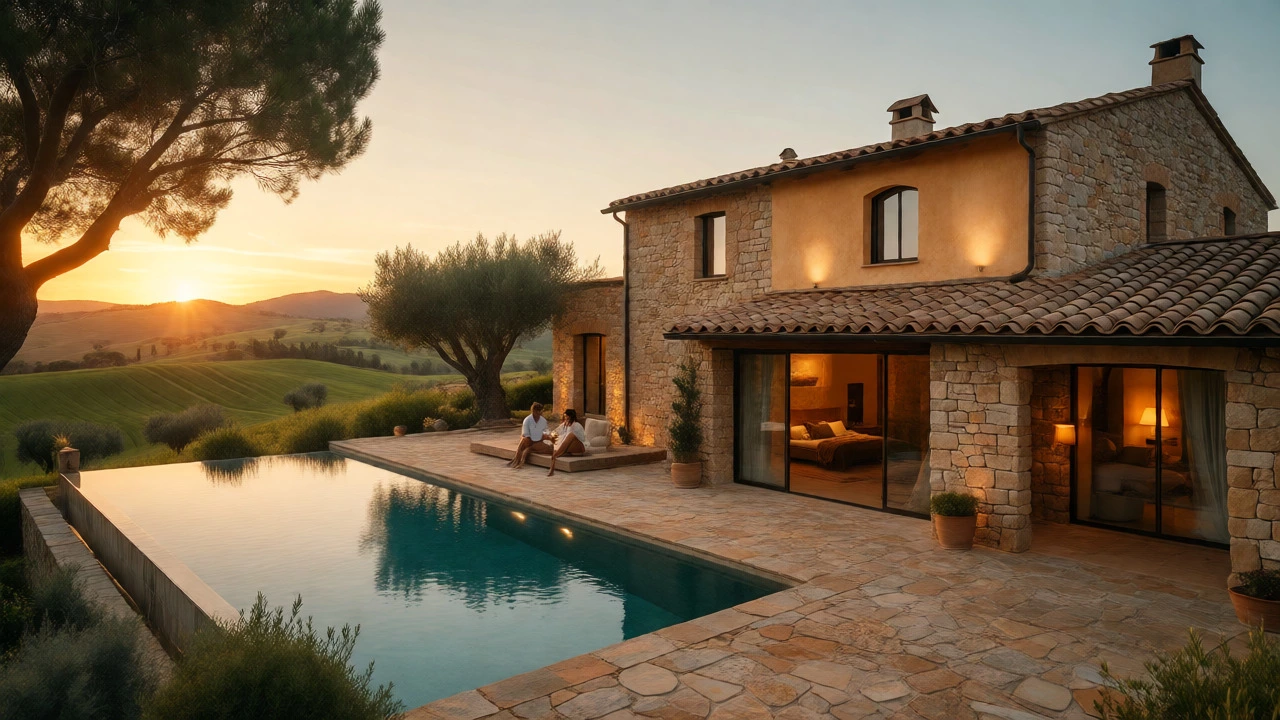
Square footage is a number, but how that number feels depends on the Architectural Style is the specific design and structural philosophy used to build a property, influencing its spatial feel and aesthetic. For instance, a Mediterranean-style villa often uses high ceilings and wide arches, which makes a 3,000-square-foot home feel like 4,000. The emphasis on light and air prevents the space from feeling cramped.
Conversely, a more traditional or colonial-style villa might have more walls and smaller, defined rooms. This can make the house feel more private and cozy, but it might also make the total area feel smaller than it actually is. When you're browsing listings, don't just look at the total square footage; look at the floor plan. A "great room" concept-where the kitchen, dining, and living areas are one giant space-creates a sense of immense volume that separate rooms simply can't match.
Land vs. Built-Up Area: The Villa Balance
One of the biggest mistakes buyers make is confusing the plot size with the house size. In the world of villas, the ratio between the two is crucial. If you have a 4,000-square-foot house on a 5,000-square-foot plot, you've basically built a giant box with no yard. That's not a villa; that's just a large house. A true villa experience usually requires a plot that is at least two to three times the size of the built-up area.
Think about it this way: if the interior is 3,000 square feet, a plot of 9,000 square feet allows for a swimming pool, a driveway, and a decent amount of greenery. This balance is what provides the privacy and exclusivity associated with villa living. In high-demand areas like the French Riviera or the coast of California, land is expensive, so you might see smaller plots. However, the value of the property remains high because the land itself is the primary asset.
Practical Considerations for Choosing Your Size
Before you commit to a massive estate, ask yourself if you actually need the space. There is a phenomenon in real estate called "maintenance fatigue." A 10,000-square-foot villa sounds great on paper, but cleaning it, heating it, and cooling it is a logistical nightmare. You'll likely need a full-time housekeeper or a property management company just to keep the dust away from rooms you only visit once a month.
If you're buying a villa as an investment or a vacation home, a medium-sized property (3,000 to 4,000 square feet) is usually the most liquid asset. It's large enough to attract luxury renters but small enough that the utility bills don't eat all your profits. On the other hand, if this is your primary residence and you have a large family, the extra bedrooms in a luxury villa aren't just for show-they're essential for sanity.
Common Layout Pitfalls to Avoid
Size is useless without a good layout. A common issue in oversized villas is the "dead zone"-long hallways or massive foyers that serve no purpose other than to make the house look big. While these might impress guests for five minutes, they are wasted square footage that you're paying for and heating.
Another pitfall is poor zoning. In some large villas, the master bedroom is on the opposite side of the house from the children's rooms, which is great for privacy but terrible for parents with toddlers. When reviewing a floor plan, trace the daily path of a resident. How far is the walk from the bedroom to the kitchen? If it takes two minutes to get to the coffee machine, the house might be too big for its own good.
Is a villa always bigger than a regular house?
Not necessarily. While we often associate villas with luxury and size, a villa is defined by its style and detachment rather than just its square footage. You can have a small, 1,500-square-foot villa that is technically a villa because it is a standalone home with a private garden, while you could have a 4,000-square-foot suburban house that doesn't fit the "villa" architectural profile.
What is the average size of a luxury villa?
In the luxury market, an average villa typically falls between 4,000 and 8,000 square feet. This usually includes 4 to 6 bedrooms, multiple living areas, and significant outdoor space. However, "ultra-luxury" properties can easily exceed 15,000 square feet.
Does the plot size matter more than the house size?
It depends on your goals. If you want privacy, gardens, and a pool, the plot size is paramount. If you have a large family or need home offices, the interior built-up area is more important. Generally, a larger plot increases the property's long-term value more than a slightly larger house does.
How many bedrooms typically come with a medium-sized villa?
A medium-sized villa usually features between 3 and 5 bedrooms. Most of these will be en-suite, meaning they have their own attached bathrooms, which is a standard feature for villa-style homes.
What should I check in a floor plan to ensure a villa isn't "too big"?
Look for the percentage of the home dedicated to hallways and foyers. If a huge chunk of the square footage is spent on transition spaces rather than living spaces, the home may feel inefficient. Also, check the proximity of essential rooms-like the kitchen and dining area-to ensure the layout is practical for daily life.
Next Steps for Prospective Buyers
If you're currently looking at villas for sale, start by creating a "must-have" list of rooms. Don't just say "I want a big house"; say "I need three bedrooms, a dedicated home office, and a guest suite." This allows you to filter listings by functionality rather than just a total number of square feet.
Once you find a property that fits your size requirements, visit it during different times of the day. A 5,000-square-foot villa can feel bright and airy at noon but cavernous and cold at 6 PM. Pay attention to how the natural light hits the larger rooms and whether the outdoor spaces feel integrated or like an afterthought. Finally, check the local zoning laws-sometimes a villa looks huge, but the plot is restricted, meaning you can't expand or add that dream pool later on.