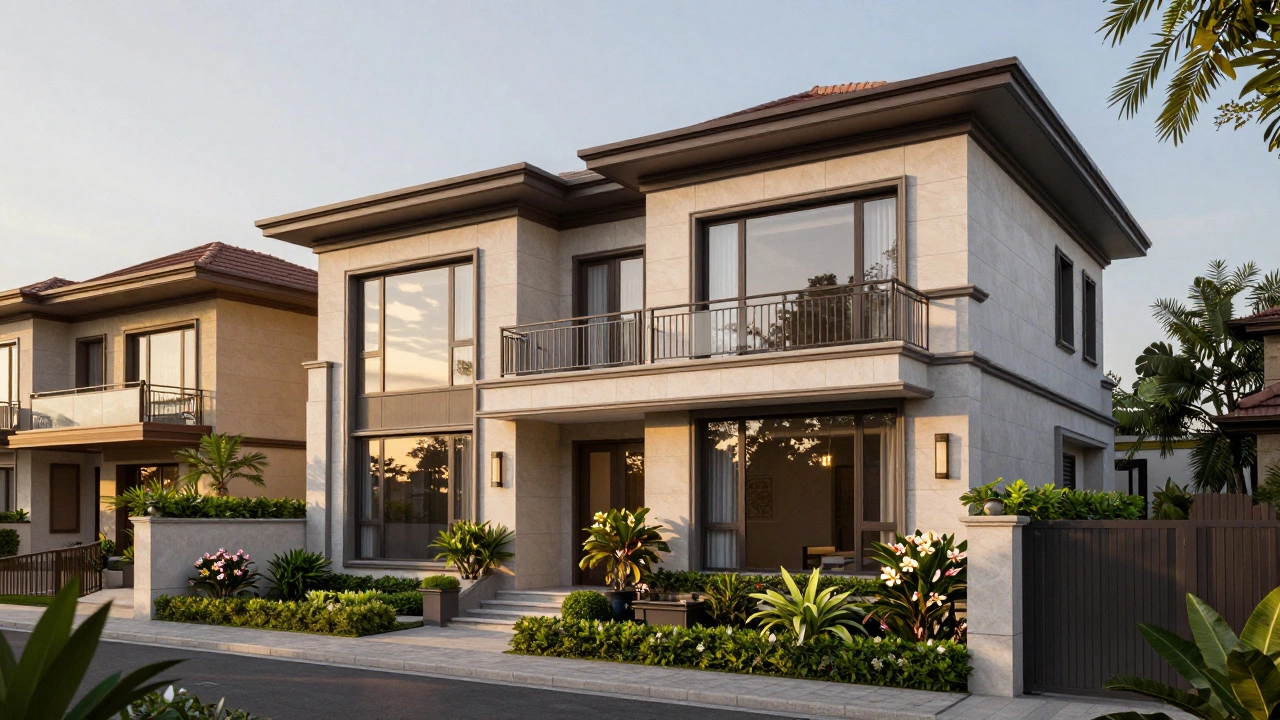
Find Your Perfect Compact Home
What is your biggest pain point with a villa?
How important is outdoor land ownership to you?
What is your priority regarding privacy?
Who will be living in the home?
Your Ideal Match:
Townhouse
Based on your answers, this property type offers the best balance of your needs.
You’ve seen the listing. The photos are stunning-marble floors, a private pool, and enough space to host a wedding reception in the backyard. It’s labeled as a villa, a large, luxurious detached house often found in resort areas or affluent suburbs. But when you walk through the door, something feels off. Maybe it’s too big to maintain on your own. Maybe the price tag includes square footage you’ll never use. Or maybe you just realize that “more space” isn’t actually what you want anymore.
This is where the question hits home: what is smaller than a villa?
If you’re looking at villas for sale but feeling overwhelmed by the scale, you aren’t alone. In 2026, the trend toward downsizing without downgrading has shifted dramatically. Buyers are trading sprawling estates for efficient, high-quality living spaces. But knowing exactly what options exist-and how they differ-is key to making the right move.
The Hierarchy of Home Sizes
To understand what comes next after a villa, we need to look at the property ladder. Real estate isn’t just about price; it’s about footprint, privacy, and maintenance. Here is how residential properties typically stack up from largest to smallest:
- Villas: Large, detached, often with extensive grounds.
- Duplexes & Semi-Detached Homes: Two units sharing one wall.
- Townhouses: Multi-story homes sharing walls on two sides, part of a row.
- Garden Apartments: Low-rise buildings with direct ground access.
- Condominiums (Condos): Individual units within a larger building, shared amenities.
- Studio Apartments: Single-room living spaces combining bedroom, living, and kitchen.
So, if a villa is at the top, what sits directly below it? Usually, it’s the townhouse or the duplex. These offer a significant reduction in land area while retaining the feel of a "home" rather than an "apartment."
Townhouses: The Direct Step Down
When people ask what is smaller than a villa, the most common answer is a townhouse, a multi-floor dwelling that shares walls with adjacent properties, offering vertical living space..
Think of a townhouse as a vertical slice of a villa. You lose the expansive yard and the detached privacy, but you keep the multi-level layout. Most townhouses have three stories: a garage downstairs, living areas on the middle floor, and bedrooms upstairs. This vertical design means the footprint is much smaller-often half the size of a typical villa lot-but the internal square footage can still be surprisingly generous.
In markets like Sydney, London, or Miami, townhouses are popular because they sit in prime locations where land is scarce. You get close to city centers and amenities without paying the premium for a detached plot. The trade-off? Shared walls mean you might hear your neighbors, and there’s usually less control over exterior modifications due to homeowners’ association (HOA) rules.
Duplexes and Semi-Detached Homes
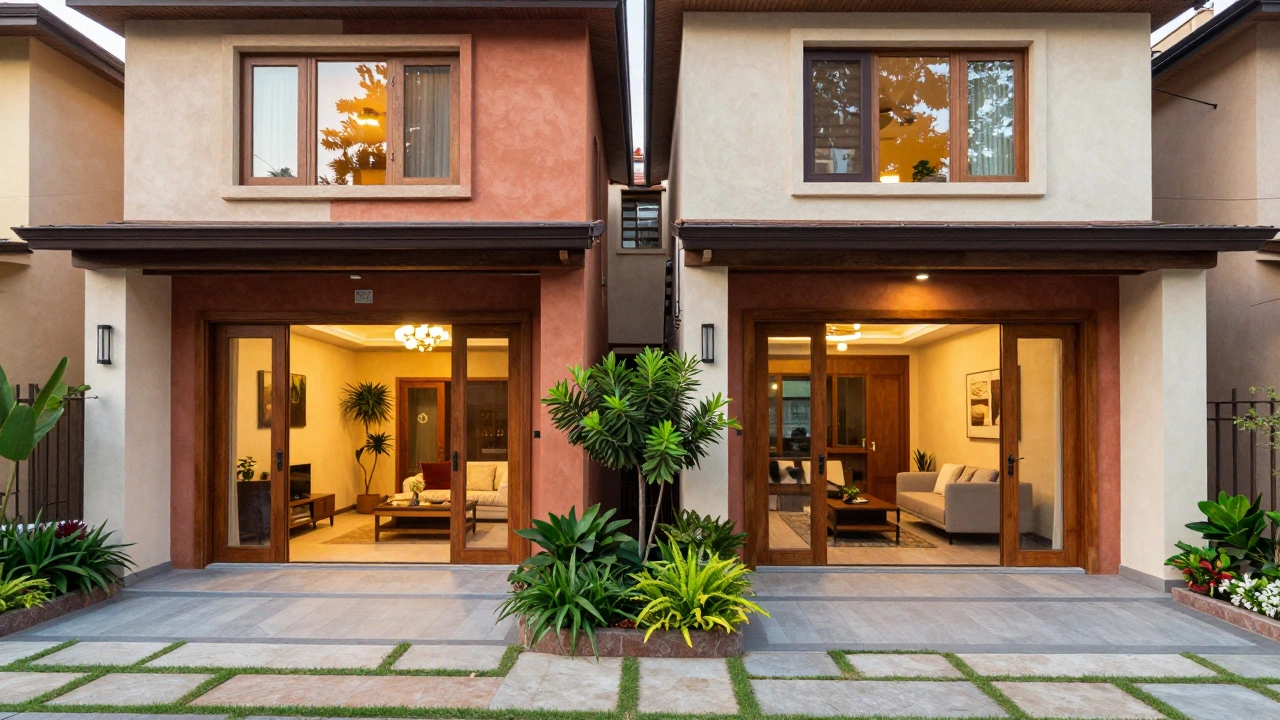
Another option smaller than a villa is the duplex, a residential building divided into two separate units, either vertically or horizontally.. Unlike a townhouse which is part of a long row, a duplex only has one neighbor. This offers a middle ground between the isolation of a villa and the density of an apartment block.
Semi-detached homes work similarly. They share a single party wall. If you value privacy more than space, a semi-detached home can feel almost as private as a villa, especially if the shared wall is well-insulated. However, the land area is significantly reduced. You’re essentially buying half the lot size of a standalone house.
| Feature | Villa | Townhouse | Duplex/Semi-Detached |
|---|---|---|---|
| Land Size | Large (500+ sqm) | Small (100-200 sqm) | Medium (200-400 sqm) |
| Privacy | High (Detached) | Low-Medium (Shared walls) | Medium (One shared wall) |
| Maintenance | High (Owner responsible) | Low-Medium (HOA handles exterior) | Medium (Split responsibilities) |
| Price per Sq Ft | Variable | Often lower entry cost | Competitive |
| Best For | Families, entertainers | Professionals, small families | Couples, downsizers |
Luxury Condominiums: Trading Land for Lifestyle
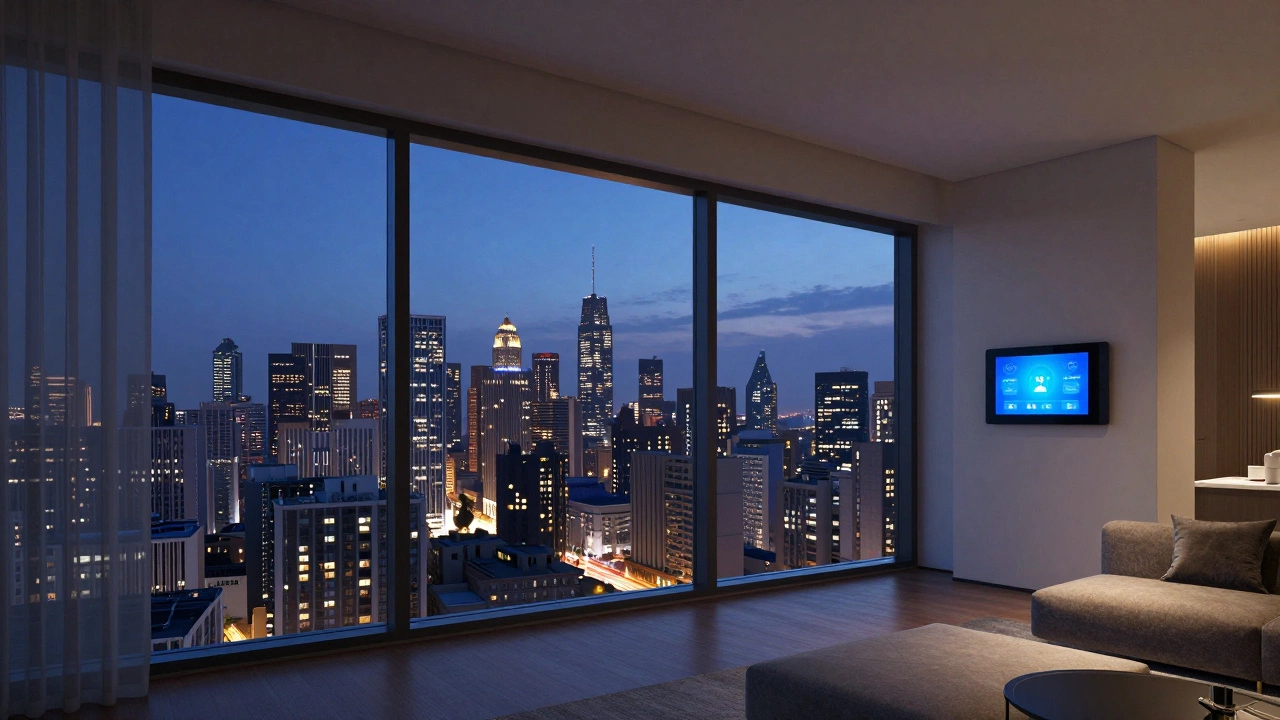
If you’re willing to give up the idea of owning land entirely, the next step down is a condominium, an individually owned unit within a multi-unit building with shared common areas.. Specifically, we’re talking about luxury condos or penthouses.
A high-end condo is smaller than a villa in terms of land ownership, but it can rival a villa in interior quality. You trade the garden for a balcony, the driveway for valet parking, and the DIY landscaping for professional concierge service. In 2026, smart home integration in condos is standard, meaning you get security and automation features that would cost tens of thousands to install in a standalone villa.
This option is ideal if your definition of "luxury" involves convenience and location rather than acreage. You’re not just buying a smaller house; you’re buying into a managed lifestyle.
Why Downsizing Makes Sense in 2026
It’s not just about finding something smaller. It’s about why smaller is becoming the new bigger. Several factors are driving this shift:
- Maintenance Fatigue: Villas require constant upkeep. Lawns, pools, and exteriors demand time or money. Townhouses and condos shift much of this burden to management companies.
- Economic Efficiency: Heating, cooling, and cleaning a massive villa is expensive. Smaller footprints mean lower utility bills and easier cleaning schedules.
- Location Premiums: With remote work stabilizing, many buyers prefer being closer to urban hubs. Townhouses and condos allow you to live in city centers where villas are prohibitively expensive or non-existent.
- Resale Value: In tight housing markets, smaller, low-maintenance properties often sell faster because they appeal to a broader demographic, including younger professionals and empty-nesters.
How to Choose the Right "Smaller" Option
Deciding what is smaller than a villa depends on what you’re trying to solve. Are you tired of mowing the lawn? Do you want to be closer to work? Or are you simply looking to free up capital?
Here is a quick decision framework:
- If you need vertical space but hate yards: Look at townhouses. They offer multiple levels for separation of living and sleeping areas without the outdoor maintenance.
- If you want maximum privacy but less space: Choose a semi-detached home or a corner-unit townhouse. You minimize shared walls while reducing the overall footprint.
- If you want zero maintenance: Go for a luxury condo. You surrender control over the exterior, but you gain freedom from repairs and landscaping.
- If you are investing: Consider duplexes. They offer rental income potential from the other unit, which villas rarely do unless you build an accessory dwelling unit (ADU).
Common Pitfalls When Downsizing
Moving from a villa to a smaller property isn’t always smooth. Here are mistakes buyers make:
Underestimating Storage Needs: Villas come with garages, attics, and sheds. Townhouses and condos often have limited storage. Before you buy, audit your belongings. If you can’t fit your life into a smaller box, you’ll feel cramped immediately.
Igoring HOA Rules: Smaller communities usually have stricter rules. Can you park your boat in the driveway? Can you renovate the kitchen facade? Read the covenants carefully. What feels like freedom in a villa can feel like restriction in a townhouse complex.
Noise Sensitivity: Sound travels differently in attached homes. Visit the property at different times of day. Listen for traffic noise, neighbor activity, and HVAC systems. Good insulation is critical.
Final Thoughts on Finding Your Fit
There is no single answer to what is smaller than a villa because "smaller" means different things to different people. For some, it’s a townhouse that keeps the multi-story feel. For others, it’s a sleek condo that maximizes location. The key is to define what aspects of villa living you truly miss and what aspects you’re ready to let go of.
In the current market, flexibility is valuable. By exploring these alternatives, you open yourself up to neighborhoods and lifestyles that a strict search for "villas for sale" would hide from you. Sometimes, the best upgrade is a downgrade in square footage that leads to an upgrade in quality of life.
Is a townhouse considered smaller than a villa?
Yes, a townhouse is typically smaller than a villa in terms of land area and total square footage. While a villa is a detached home with its own substantial plot of land, a townhouse shares walls with neighboring units and usually has a much smaller footprint, focusing on vertical living rather than horizontal sprawl.
What is the difference between a duplex and a semi-detached home?
The terms are often used interchangeably, but there is a subtle difference. A duplex generally refers to a building divided into two units, which can be stacked vertically or side-by-side, often owned by a single landlord or two separate owners. A semi-detached home specifically refers to two houses joined by a single common wall, each with its own entrance and land, typically designed as identical mirror images.
Are condos cheaper than villas?
Generally, yes. Condos are usually less expensive than villas because you are not purchasing land, only the air rights to your unit. However, luxury condos in prime city locations can sometimes command prices comparable to mid-range villas in suburban areas. You also pay monthly HOA fees for condos, which can add to the long-term cost.
What are the maintenance costs of a townhouse compared to a villa?
Townhouses typically have lower maintenance costs for exterior elements like roofing, siding, and landscaping, as these are often covered by the Homeowners Association (HOA). However, you will pay monthly HOA fees. Villas require the owner to handle all maintenance personally, which can be costly and time-consuming, but you avoid monthly association fees.
Can I rent out a townhouse or duplex?
Yes, but restrictions vary. Many HOAs governing townhouses have rules about short-term rentals (like Airbnb) and may limit the percentage of units that can be rented out. Duplexes are often excellent investment properties because you can live in one unit and rent out the other, providing immediate cash flow to help cover the mortgage.